A Structured Ayurvedic Approach for Long-Standing Type 2 Diabetes

We apply Ayurvedic metabolic science to correct the internal dysfunction that keeps chronic diabetes locked in place.

Built for patients whose condition has progressed beyond routine lifestyle advice or medication adjustment.

Clinical environment representing precision metabolic care

The Reality of Long-Term Diabetes

Years of elevated glucose do more than raise numbers on a meter. At the cellular level, prolonged exposure to high sugar retrains cells to malfunction. Insulin receptors lose sensitivity not because of a temporary imbalance, but because cells have learned—and now expect—dysfunction as their baseline state.

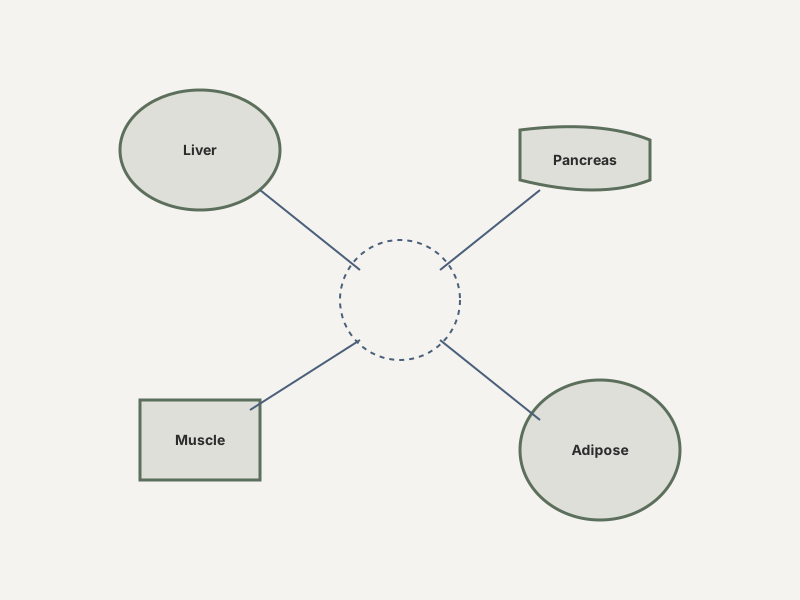
Organs that have managed years of metabolic stress begin to adapt to the damage itself. The pancreas shifts from active secretion to conservation mode. The liver, overwhelmed by constant glucose processing, develops its own form of resistance. Muscle tissue stops responding to insulin signals with the coordination it once had.

For many patients, medication escalation follows—from single drugs to combinations, from oral agents to insulin. This progression often reflects not personal failure, but the body's deepening entrenchment in dysfunction. Medication can suppress glucose expression, but it does not unwind the years of accumulated internal imbalance that drive the disease forward.

Ayurveda understands this state as progressive metabolic degradation—a condition where the body's internal coordination has been systematically disrupted over time. The disease you have today is not the disease you started with. It has evolved, deepened, and spread through interconnected systems.

This is not about blame. It is about biological reality. Long-term diabetes creates internal conditions that resist surface-level correction, regardless of effort or intention.

Why Many Patients Plateau

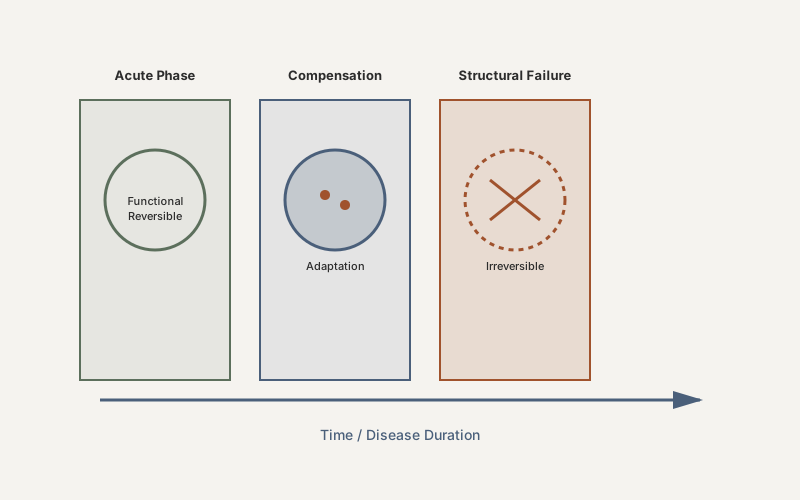
Insulin resistance in long-standing diabetes becomes structural, not just biochemical. The problem is no longer limited to receptor function or hormone levels. Cellular machinery itself has adapted to chronic stress, encoding patterns of dysfunction into tissue-level memory.

The pancreas, liver, and skeletal muscle lose their coordinated metabolic response. Each organ develops its own adaptive strategies to survive in a disordered internal environment. What begins as temporary compensation becomes permanent recalibration. The body repeats learned dysfunction automatically, even when external conditions improve.

This phenomenon—metabolic memory—explains why glucose normalization alone often fails to restore health. Cells remember years of damage. Organs retain adaptive patterns long after blood sugar stabilizes. The internal metabolic environment remains disordered at levels that standard monitoring cannot detect.

Ayurveda identifies this as deep-seated pathology: dysfunction that has moved beyond active symptoms into structural entrenchment. Surface interventions—diet changes, exercise routines, medication adjustments—address expression, not foundation. They manage current glucose levels while the underlying disorder continues to evolve silently.

Progressive correction requires working at the level where dysfunction is actually stored: in cellular adaptation patterns, in organ-level metabolic coordination, in the body's learned responses to internal stress.

Conceptual diagram showing progression from early metabolic imbalance to reversal-resistant diabetes
Progression from early imbalance to structural resistance

The Ayurvedic Reversal Framework

Ayurvedic correction for long-term diabetes operates at four interconnected levels, addressing the depth at which dysfunction has taken root.

At the cellular level, work focuses on restoring insulin responsiveness—not by forcing receptors to react, but by creating internal conditions where normal sensitivity can gradually return. This requires addressing the chronic inflammatory load that keeps cells in a state of metabolic stress, recalibrating the signals that govern cellular fuel processing.

Organ-level correction addresses functional degradation in the pancreas, liver, and muscle tissue. Each organ's capacity must be rebuilt systematically, respecting the timeline required for biological repair. Forcing rapid change in exhausted organs often triggers protective resistance, deepening the very patterns being addressed.

The work extends to metabolic signaling—the communication networks that coordinate glucose processing across multiple systems. When these pathways have been disrupted for years, reestablishing coordination requires precise sequencing. Correcting one system before another is ready can create new imbalances.

Ayurveda's diagnostic framework identifies the specific order in which each patient's internal systems have failed. Correction follows that same order in reverse, unwinding dysfunction layer by layer rather than attacking all fronts simultaneously.

This is systems medicine. It operates through sequenced intervention, continuous adaptation to biological response, and respect for the body's own repair capacity. The goal is not suppression of symptoms, but progressive restoration of metabolic coordination.

Organ-level metabolic coordination affected in long-term diabetes
Interconnected organ systems requiring coordinated correction

Personalized Internal Programs

Working with long-standing diabetes cannot be reduced to a single protocol or packaged plan. Each patient enters through a structured clinical process that begins with detailed assessment of disease history, laboratory indicators, metabolic behavior, and the sequence in which dysfunction has developed across systems.

This assessment establishes the internal pattern of failure. In some patients, insulin resistance is driven primarily by hepatic overload. In others, pancreatic exhaustion or chronic inflammatory burden dominates. Ayurvedic diagnostic logic identifies these relationships so that correction begins at the level most responsible for ongoing deterioration.

Correction then proceeds through ordered stages rather than aggressive intervention. Initial work aims to reduce active metabolic stress and restore basic coordination between organs. As stability emerges, deeper layers of dysfunction can be addressed without provoking defensive resistance from exhausted tissues.

Support may involve modification of nutritional structure, regulation of daily physiological rhythms, supervised review of medications, and Ayurvedic interventions selected according to internal response patterns. These elements are not applied uniformly or simultaneously; they are introduced in sequence as biological readiness allows.

Medication dependency is evaluated conservatively. Reduction is considered only when internal metabolic control demonstrates sufficient resilience to sustain change without external force. This approach prioritizes safety and preserves organ function throughout the process of correction.

Uniform programs fail because long-term diabetes does not progress along a single pathway. The objective of this work is not rapid glucose normalization, but progressive restoration of metabolic coordination that can be maintained over time.

Structure of Clinical Correction

Phase 1 — Clinical Assessment

  • Review of disease duration and treatment history
  • Laboratory and metabolic marker evaluation
  • Identification of dominant failure patterns
  • Assessment of lifestyle and physiological stressors

Phase 2 — Initial Correction

  • Reduction of active metabolic stress
  • Restoration of basic organ coordination
  • Stabilization of inflammatory and glycaemic volatility
  • Introduction of correction in biologically tolerable sequence

Phase 3 — Deep Metabolic Support

  • Support for insulin responsiveness and digestive efficiency
  • Rebuilding of hepatic and pancreatic functional capacity
  • Strengthening of internal metabolic signalling
  • Adjustment based on observed biological response

Phase 4 — Monitoring & Adaptation

  • Regular clinical review of progress
  • Medication guidance under supervision
  • Ongoing refinement of intervention sequence
  • Transition toward long-term metabolic stability

This structure does not represent a fixed timeline or uniform protocol. Each phase advances only when internal metabolic response demonstrates readiness. Correction proceeds according to biological capacity, not predetermined schedules.

Who This Program Is For—And Who It Is Not For

This Work Is Designed For:

  • Patients with long-duration Type 2 diabetes—typically 8 to 25 years or more—who have progressed beyond early-stage management
  • Those currently on multiple medications, insulin, or combination therapy
  • Patients facing complications, metabolic instability, or persistent deterioration despite adherence to conventional care
  • Individuals who understand that reversal of entrenched diabetes requires time, systematic correction, and ongoing clinical engagement
  • Those seeking Ayurvedic intervention at the systems level, not dietary advice or lifestyle coaching
  • Patients willing to work within a framework of progressive internal change rather than rapid symptomatic relief

This Clinic Is Not For:

  • Newly diagnosed diabetics or those in early stages where standard lifestyle modifications and basic medication are still effective
  • Patients seeking food plans, exercise programs, or motivational support rather than deep metabolic correction
  • Those looking for quick fixes, guaranteed timelines, or dramatic short-term transformations
  • Individuals seeking package-based treatments or standardized programs
  • Patients unwilling to maintain regular clinical monitoring or coordinate with existing physicians

This filtering is intentional. The Treatment requires commitment, patience, and realistic expectations. Accepting unsuitable patients compromises both their outcomes and the integrity of the clinical approach.

Outcomes: What Progressive Correction Achieves

The focus of Ayurvedic metabolic correction is internal stability—the restoration of coordinated function across organ systems, reduction in inflammatory metabolic load, and rebuilding of cellular responsiveness. These changes occur gradually and are measured through sustained patterns, not isolated readings.

For many patients, progressive correction slows or halts disease advancement. Organs that were deteriorating stabilize. Medication requirements plateau or reduce as internal function improves. The body regains some capacity to regulate glucose without external force.

Improved metabolic resilience—the ability to handle dietary variation, stress, or minor illness without severe glucose disruption—is a common outcome. This resilience reflects genuine internal repair, not temporary suppression of symptoms.

What "reversal" means in the context of long-standing diabetes must be understood realistically. It is not erasure of history or return to pre-diabetic physiology. It is the progressive restoration of metabolic function to a state where the disease no longer actively worsens, where internal systems regain coordination, and where dependence on escalating intervention reduces.

Individual outcomes vary significantly. Response depends on total disease duration, extent of internal damage already established, medication history, genetic factors, and individual biological repair capacity. Some patients achieve substantial functional restoration. Others experience stabilization without full reversal. A minority may show minimal response due to irreversible organ damage. Clinical honesty requires acknowledging this variation.