
Ayurveda as Systems-Level Metabolic Science
Ayurveda approaches diabetes not as a disease of elevated glucose but as progressive failure of metabolic coordination across multiple interconnected systems. This framework predates modern biochemistry yet describes patterns of dysfunction that contemporary research validates. Where conventional medicine measures individual parameters—glucose, HbA1c, lipids—Ayurvedic assessment identifies how those parameters relate to deeper patterns of internal imbalance.
The Ayurvedic diagnostic framework operates through pattern recognition: identifying which internal systems failed first, in what sequence subsequent systems deteriorated, where compensatory mechanisms exhausted, and which organs retain functional capacity versus those experiencing irreversible damage. This diagnostic depth reveals not just that dysfunction exists but how it developed—information critical for designing correction sequences.
This is not mysticism or spirituality. It is applied systems biology—understanding the human organism as an integrated metabolic network where dysfunction propagates through predictable pathways. Modern medicine increasingly recognizes what Ayurveda has described for millennia: diabetes represents multi-organ metabolic network failure, not single-organ disease.
The value of Ayurvedic framework lies in its focus on correction sequencing. Modern treatment protocols apply standardized approaches based on glucose readings and disease duration. Ayurvedic assessment identifies individual failure patterns, determining which systems require correction first to enable subsequent systems to recover. Two patients with identical HbA1c may need entirely different intervention sequences based on their distinct internal collapse patterns.
"In Ayurveda, progressive metabolic collapse is understood as Samprapti unfolding — the complete disease pathway from initial Dosha imbalance through Dhatu contamination to structural organ involvement. Understanding this pathway is what makes targeted reversal possible."
Ayurvedic Clinical Lens · Diabetes Reversal Clinic
The Concept of Progressive Internal Imbalance
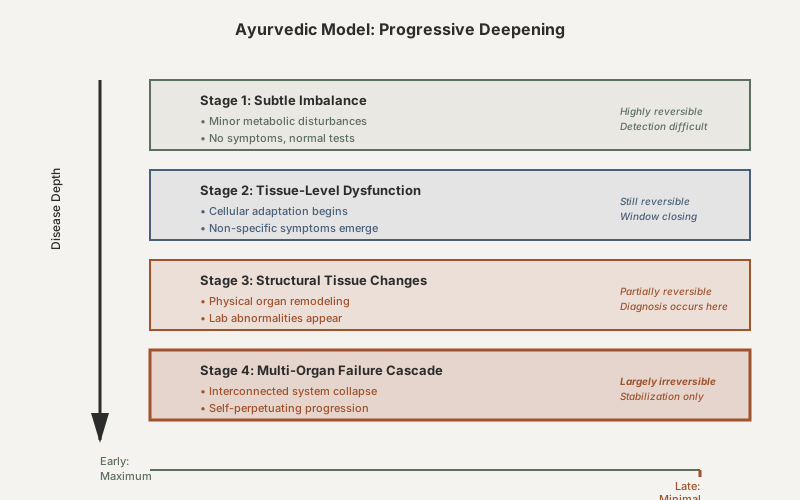
Ayurveda conceptualizes disease progression through stages of deepening imbalance. Initial dysfunction occurs at the most superficial metabolic level—minor disturbances in digestion, energy regulation, or cellular metabolism that the body can compensate for without obvious symptoms. These early imbalances often go unrecognized because standard medical testing shows normal results while subtle dysfunction operates beneath detection thresholds.
If initial imbalances persist without correction, they progress to affect tissue-level function. Metabolic efficiency declines. Cellular responsiveness degrades. Inflammatory processes activate. At this stage, symptoms may emerge but remain non-specific: fatigue, digestive irregularity, variable energy levels. Laboratory values might shift slightly but remain within "normal" ranges. The body still compensates but requires increasing effort to maintain homeostasis.
Continued progression leads to structural tissue changes—the stage where modern medicine first diagnoses disease. Organs adapt to chronic dysfunction through physical remodeling. Cells lose normal architecture. Inflammatory infiltration becomes permanent. Compensatory capacity exhausts. At this point, laboratory abnormalities become evident and symptoms grow obvious. But substantial damage has already accumulated during earlier unrecognized stages.
The final stage involves multi-organ failure where interconnected systems collapse in cascading patterns. Damage in one organ accelerates deterioration in others. Compensatory mechanisms not only fail but become additional sources of dysfunction. The disease becomes self-perpetuating, resistant to surface interventions, and progressive despite treatment. This terminal stage requires the most intensive intervention yet offers the least reversibility potential.
Identifying the Primary Site of Dysfunction
Ayurvedic assessment determines where metabolic collapse originated—which organ or system failed first, triggering the cascade of downstream dysfunction. In some patients, adipose tissue dysfunction initiates the process: fat cells become inflamed and insulin-resistant, releasing excessive fatty acids that infiltrate and damage liver, muscle, and pancreas. The primary pathology is adipose; other organs suffer secondary consequences.
In others, hepatic dysfunction leads: the liver develops insulin resistance or fatty infiltration first, increasing glucose output and creating metabolic stress on pancreas and peripheral tissues. The pancreas exhausts attempting to compensate for hepatic glucose overproduction. Muscle becomes resistant responding to chronic glucose excess. The liver drives the entire pathological sequence.
For some patients, pancreatic vulnerability is primary: beta cells prove particularly sensitive to metabolic stress, losing function early while other organs retain relatively normal insulin sensitivity. The problem is insufficient insulin production rather than excessive insulin resistance. These patients show different clinical patterns and require different intervention priorities than those with primary hepatic or adipose dysfunction.
Identifying the primary failure site allows targeted intervention addressing root causes rather than downstream effects. Treating hepatic glucose overproduction as primary pathology when adipose dysfunction is actually driving the process provides limited benefit—the liver will continue being stressed by fatty acid overflow from dysfunctional adipose tissue. Correct identification of causation sequence enables effective intervention design.
Understanding Digestive Fire and Metabolic Capacity
Ayurveda uses the concept of digestive fire—metabolic processing capacity—to describe cellular ability to properly metabolize nutrients. Strong digestive fire represents efficient cellular metabolism: nutrients are completely processed, energy production is optimal, and minimal toxic byproducts accumulate. Weak digestive fire indicates impaired cellular metabolism where incomplete processing generates metabolic waste and toxicity.
In modern terms, digestive fire corresponds to mitochondrial function, oxidative capacity, and cellular metabolic efficiency. Patients with robust mitochondrial function—strong digestive fire—can process glucose and fatty acids effectively, maintaining cellular health even under metabolic stress. Those with mitochondrial dysfunction—weak digestive fire—accumulate partially metabolized substrates that damage cells and worsen insulin resistance.
This framework explains why identical dietary or medication interventions produce different results in different patients. Someone with strong baseline metabolic capacity responds well to dietary changes because their cells can properly process nutrients. Someone with severely compromised metabolic capacity shows minimal response to the same diet because their cells lack the machinery to appropriately metabolize even moderate nutrient loads.
Ayurvedic intervention therefore aims not just to reduce metabolic load but to restore metabolic processing capacity. This requires addressing mitochondrial health, reducing oxidative stress, supporting cellular repair mechanisms, and removing accumulated metabolic toxins that impair cellular function. Strengthening digestive fire—rebuilding metabolic capacity—enables the body to properly process nutrients that previously caused dysfunction.
The Role of Accumulated Metabolic Toxins
Ayurveda describes accumulated metabolic waste products—incompletely processed nutrients and cellular debris—that build up when metabolic capacity is overwhelmed. These substances interfere with normal cellular function, block metabolic pathways, and perpetuate dysfunction even after external metabolic stress is reduced.
Modern biochemistry validates this concept through identification of specific metabolic intermediates that accumulate in diabetes: advanced glycation end products, lipid peroxidation products, inflammatory mediators, oxidative stress markers. These substances—modern equivalents of Ayurvedic metabolic toxins—directly damage tissues and worsen metabolic dysfunction through multiple mechanisms.
The toxic accumulation creates persistent inflammatory activation and oxidative stress even when glucose levels improve. A patient may achieve normal HbA1c through medication yet continue accumulating these substances because underlying metabolic processing capacity remains impaired. Surface correction of glucose does not address deeper metabolic toxin accumulation.
Ayurvedic correction protocols include specific phases addressing metabolic toxin elimination. This is not the superficial "detox" promoted in wellness culture. It refers to supporting the body's endogenous clearance systems—enhancing hepatic detoxification pathways, improving kidney filtration, supporting cellular autophagy mechanisms that clear damaged proteins and organelles. Restoring clearance capacity allows accumulated toxins to be processed and removed, reducing their ongoing cellular damage.
Individual Constitution and Disease Susceptibility
Ayurvedic assessment considers individual constitutional factors—inherent metabolic tendencies present from birth—that influence how diabetes develops and progresses. Some individuals have constitutional tendency toward inflammatory metabolism: they generate excessive inflammatory mediators in response to metabolic stress. Others show tendency toward impaired fat metabolism: they accumulate ectopic lipid easily. Others demonstrate pancreatic vulnerability: their beta cells prove sensitive to stress.
These constitutional patterns—recognized empirically in Ayurveda for centuries—correlate with genetic and epigenetic factors modern science now identifies. Individuals with certain genetic polymorphisms show increased inflammatory responses, impaired lipid metabolism, or reduced beta-cell resilience. The Ayurvedic framework organizes these patterns into clinically useful categories for assessment and intervention design.
Constitutional assessment allows prediction of which complications a patient is most vulnerable to and which interventions will prove most effective. Someone with inflammatory constitutional tendency requires aggressive anti-inflammatory intervention but may tolerate higher carbohydrate intake than someone with impaired fat metabolism. Constitutional factors determine not whether intervention can work but what type of intervention matches individual biology.
Timing and Seasonal Influences on Metabolic Function
Ayurveda recognizes that metabolic function varies with circadian rhythms, seasonal changes, and individual life stages. Certain times favor metabolic correction while others make intervention more difficult. This temporal awareness informs intervention timing for optimal results.
Modern chronobiology validates temporal metabolic variation. Insulin sensitivity varies throughout the day, peaking in morning and declining through evening. Seasonal changes affect vitamin D status, inflammatory markers, and metabolic rate. Age-related changes in hormone levels, cellular repair capacity, and mitochondrial function influence treatment response.
Ayurvedic intervention design accounts for these temporal factors, optimizing treatment timing to match favorable metabolic windows. This does not mean waiting for "perfect" conditions but rather intensifying certain interventions when biology favors response and moderating when conditions make aggressive intervention counterproductive.
Integration With Modern Clinical Understanding
The power of Ayurvedic framework lies not in replacing modern medicine but in providing additional diagnostic and therapeutic dimensions. Modern laboratory testing excels at quantifying specific parameters but struggles to identify complex patterns across multiple systems. Ayurvedic assessment reveals those patterns, informing which modern interventions to prioritize and sequence.
A patient showing primary hepatic dysfunction in Ayurvedic assessment might receive prioritized interventions addressing fatty liver and hepatic insulin resistance—metformin, hepatoprotective compounds, targeted dietary modifications. One showing primary pancreatic vulnerability requires early beta-cell protective strategies. Someone with predominant adipose dysfunction needs aggressive focus on visceral fat reduction and adipose tissue inflammation.
The sequencing insight is Ayurveda's critical contribution: correction must proceed in specific order based on individual failure pattern rather than applying generic protocols. Systems that failed first must be addressed first. Downstream consequences can only resolve after upstream drivers are corrected. Attempting to restore terminal effects while primary causes remain active produces minimal lasting benefit.
This framework transforms diabetes from a condition requiring lifelong management into one with genuine correction potential—provided intervention matches individual pathology and proceeds in biologically appropriate sequence. The work is complex, time-intensive, and demands sophisticated assessment. But for patients whose diabetes has resisted standard management, this systems-level approach offers possibilities that glucose-focused treatment alone cannot provide. Ayurvedic perspective: The power of this Ayurvedic framework lies in its directionality: once the sequence of collapse is mapped, correction proceeds in reverse — unwinding each layer of dysfunction in the order it developed, restoring what can be restored, and stabilising what cannot.