
The Biological Transformation Over Time
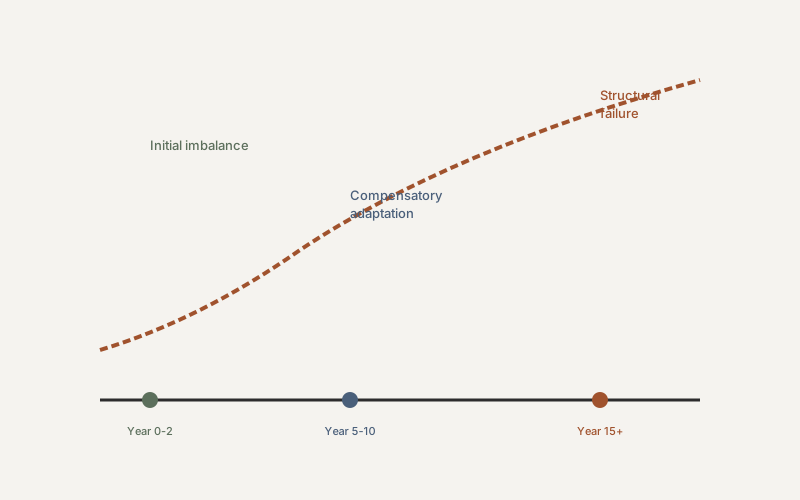
When diabetes begins, the body's metabolic dysfunction is acute and relatively superficial. Cells experience elevated glucose as environmental stress—an abnormal condition to which they must respond. Insulin receptors still function. The pancreas still produces adequate hormone. The liver processes glucose with reasonable efficiency. Muscle tissue accepts insulin signals and takes up sugar appropriately.
In this early phase, the disease operates primarily at the biochemical level. Glucose numbers rise because of temporary imbalances in diet, physical activity, stress response, or minor genetic predisposition. Intervention at this stage—medication initiation, lifestyle modification—often produces rapid improvement because the underlying machinery remains intact. The body has not yet adapted to dysfunction as its normal state.
But years change everything. Prolonged exposure to high glucose rewrites cellular function at the genetic expression level. Insulin receptor density decreases. Signal transduction pathways deteriorate. Mitochondrial efficiency declines. What begins as temporary metabolic stress becomes permanent cellular programming. The adaptations that initially helped cells survive in a hostile environment become the adaptations that prevent recovery even when that environment improves.
"Ayurveda describes this progression as Dhatu Dushti — the sequential contamination of tissue layers. What begins as a functional imbalance in digestion and blood gradually becomes structural pathology in muscle, fat, and nerve. Duration determines depth."
Ayurvedic Clinical Lens · Diabetes Reversal Clinic
When Compensation Becomes Exhaustion
The human body possesses remarkable compensatory capacity. When blood sugar rises, the pancreas increases insulin production—sometimes to levels several times higher than normal. When muscle tissue becomes less responsive, the liver compensates by adjusting glucose release patterns. When one metabolic pathway fails, alternate pathways activate to maintain basic function.
These compensatory mechanisms explain why many diabetics maintain relatively stable glucose levels for years despite progressive internal deterioration. The body is working harder—much harder—to achieve the same metabolic outcomes. Pancreatic beta cells operate at maximum capacity. Hepatic glucose regulation runs in overdrive. Insulin resistance worsens, but increased insulin secretion masks the severity of that resistance.
Eventually, compensation fails. Not because the patient stopped trying, but because biological systems cannot sustain emergency-level function indefinitely. The pancreas, exhausted from years of overproduction, begins to lose secretory capacity. The liver, overwhelmed by constant metabolic demands, develops its own insulin resistance. Muscle tissue, having adapted to chronic dysfunction, loses the cellular machinery needed for normal glucose uptake.
When these failures occur, glucose control deteriorates rapidly despite unchanged behavior. Medication that previously worked stops being effective. Drug regimens escalate from single agents to combinations, from oral medications to insulin. This progression does not reflect patient non-compliance. It reflects the biological reality of compensatory exhaustion.
Cellular Memory and Structural Change
Perhaps the most critical difference between early and advanced diabetes lies in what researchers call metabolic memory—the phenomenon where cells retain dysfunction patterns long after glucose normalizes. This is not metaphorical memory. It is biological memory encoded in epigenetic modifications, altered gene expression, and structural cellular changes.
When cells experience years of high glucose, they undergo permanent modifications. DNA methylation patterns change. Histone proteins that regulate gene expression develop lasting alterations. Inflammatory signaling pathways become constitutively active. Even when external glucose levels improve through medication or lifestyle changes, these internal cellular modifications persist.
This explains one of the most frustrating aspects of long-term diabetes management: why improved glucose control often fails to halt disease progression. A patient with fifteen years of diabetes who achieves normal HbA1c through intensive medication may still develop complications, still experience worsening insulin resistance, still progress toward organ failure. The glucose numbers have improved, but the cellular damage remains active at deeper levels that standard monitoring cannot detect.
At this stage, diabetes is no longer a disease of elevated blood sugar. It is a disease of cellular dysfunction, organ adaptation, and systemic metabolic coordination failure. The glucose elevation is merely the visible expression of much deeper internal disorder.
The Shift From Biochemical to Structural Pathology
Early diabetes operates primarily through reversible biochemical processes. Insulin resistance exists but remains functional. Pancreatic reserve is adequate. Organ systems maintain coordinated metabolic response. Correction at this stage can restore relatively normal function because the fundamental biological architecture remains intact.
Long-term diabetes crosses into structural pathology. Pancreatic beta cells die through apoptosis, reducing absolute insulin production capacity. Hepatic stellate cells deposit collagen, creating early fibrosis that impairs liver function. Muscle fibers lose mitochondrial density, permanently reducing oxidative metabolism capacity. Microvascular changes in kidneys, retinas, and nerves create irreversible damage.
These are not temporary imbalances that medication can quickly reverse. They are anatomical and structural changes that require genuine biological repair—a process far slower and more complex than simple glucose suppression. The body must rebuild damaged tissues, restore lost cellular populations, reestablish disrupted metabolic pathways. This work operates on timelines measured in months and years, not days and weeks.
Understanding this distinction is critical. A patient with two years of diabetes and one with twenty years of diabetes may show similar HbA1c readings, but they do not have the same disease. The first has biochemical dysfunction amenable to rapid intervention. The second has structural pathology requiring systematic long-term correction. Treating them identically—with the same medications, the same lifestyle advice, the same expectations—ignores biological reality.
Implications for Treatment Approach
Recognition that long-term diabetes represents a fundamentally different disease state demands different therapeutic thinking. Glucose management remains necessary but becomes insufficient. Medication continues to play a role but cannot address structural damage. Lifestyle modification helps but will not reverse years of cellular adaptation.
What becomes necessary is work at the systems level—intervention designed to address not just glucose expression but the underlying metabolic coordination failure. This requires understanding how organs have adapted to dysfunction, in what sequence systems failed, where compensatory mechanisms still function versus where they have collapsed entirely.
Ayurvedic medicine approaches this work through frameworks that identify internal failure patterns and design correction sequences specific to individual pathology. The focus shifts from suppressing symptoms to progressively restoring function, from forcing rapid glucose drops to rebuilding metabolic capacity over appropriate timelines.
This is not alternative medicine thinking. It is recognition that advanced diabetes requires treatment sophistication proportional to disease complexity. A patient whose diabetes has evolved through fifteen years of progression needs intervention that addresses fifteen years of accumulated damage—not just today's glucose reading. Ayurvedic perspective: Ayurveda's contribution here is diagnostic precision: identifying which tissue layers have been compromised, in what order, and what that sequence means for the realistic depth and timeline of correction.