
The Nature of Chronic Low-Grade Inflammation
Type 2 diabetes exists in a state of persistent low-grade inflammation that differs fundamentally from acute inflammatory responses to injury or infection. This chronic inflammation operates at lower intensity—not dramatic enough to cause obvious symptoms—but maintains continuous activity over years or decades. It represents maladaptive activation of immune and inflammatory systems that should resolve after addressing acute threats but instead persist in self-perpetuating patterns.
Unlike acute inflammation that serves clear protective purposes, chronic metabolic inflammation damages the tissues it should protect. Inflammatory mediators that normally help clear infection and promote healing instead interfere with normal cellular function when continuously present. Immune cells that should defend against pathogens attack metabolically stressed tissues. The body's protective systems become sources of ongoing damage.
This inflammatory state manifests as elevated circulating levels of inflammatory cytokines—particularly tumor necrosis factor alpha, interleukin-6, and interleukin-1 beta. These signaling molecules normally coordinate immune responses but when chronically elevated interfere with insulin signaling, damage cellular structures, and accelerate metabolic dysfunction. Laboratory markers like high-sensitivity C-reactive protein remain persistently elevated, documenting ongoing inflammatory activity.
The insidious aspect of chronic inflammation is its relative invisibility. Patients do not experience fever, redness, swelling, or pain—the classic signs of acute inflammation. They may feel generally unwell, fatigued, or experience vague symptoms, but nothing dramatic signals the destructive inflammatory processes occurring internally. This silent progression allows substantial tissue damage to accumulate before clinical recognition.
"In Ayurvedic understanding, chronic low-grade inflammation maps precisely to Ama accumulation — unprocessed metabolic residue that coats tissues, blocks functional channels, and sustains the inflammatory cycle long after its initial triggers are gone."
Ayurvedic Clinical Lens · Diabetes Reversal Clinic
Sources of Chronic Inflammation in Diabetes
Adipose tissue—particularly visceral fat surrounding internal organs—functions as a major inflammatory source in diabetes. In obesity and insulin resistance, adipocytes become enlarged and dysfunctional. These stressed fat cells secrete inflammatory cytokines rather than the normal adipokines that regulate metabolism. Additionally, immune cells—especially pro-inflammatory macrophages—infiltrate adipose tissue, establishing permanent inflammatory foci that continuously release damaging mediators into circulation.
The gut contributes to systemic inflammation through multiple mechanisms. Dysbiosis—imbalance in intestinal bacterial populations—can increase intestinal permeability, allowing bacterial products like lipopolysaccharides to enter circulation. These bacterial components trigger inflammatory responses throughout the body. Dietary factors, particularly high intake of processed foods and refined carbohydrates, can directly activate inflammatory pathways through metabolic stress and oxidative damage.
Ectopic fat deposition—fat accumulation in organs not designed for fat storage like liver, pancreas, and muscle—generates localized inflammation. When hepatocytes, beta cells, or muscle cells store excess lipid, they experience lipotoxicity that activates inflammatory stress responses. These local inflammatory reactions contribute to the organ-specific dysfunction characteristic of advanced diabetes: fatty liver inflammation impairing hepatic function, pancreatic islet inflammation damaging beta cells, muscle inflammation worsening insulin resistance.
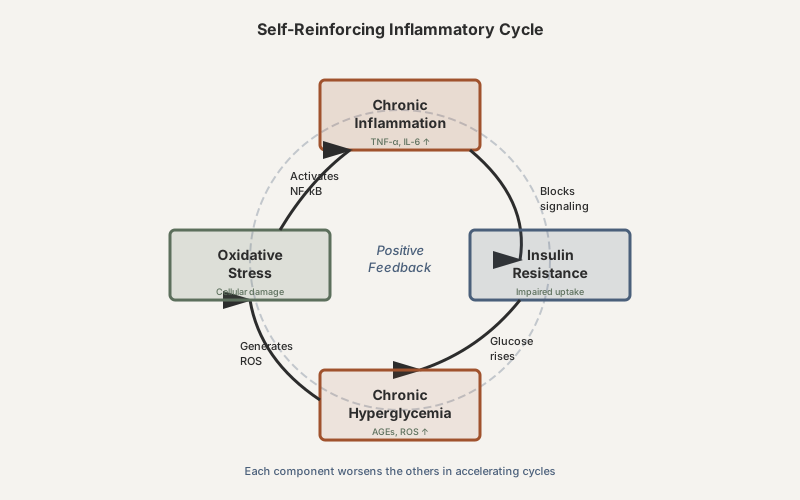
Hyperglycemia itself triggers inflammation through multiple pathways. Elevated glucose generates advanced glycation end products that bind to receptors on immune cells and tissue cells, activating inflammatory signaling. High glucose increases oxidative stress, which activates inflammatory transcription factors like NF-kappa B. Glucose fluctuations—repeated cycles of hyperglycemia and relative hypoglycemia—generate particularly intense oxidative and inflammatory bursts.
Inflammation's Direct Effects on Insulin Action
Inflammatory cytokines directly interfere with insulin signaling at the molecular level. Tumor necrosis factor alpha activates kinases that phosphorylate insulin receptor substrate proteins at inhibitory sites, blocking signal transmission. This means insulin can bind to its receptor normally, but the signal cannot propagate to downstream effectors that control glucose uptake and metabolism. The cell becomes blind to insulin's presence despite adequate circulating levels.
Interleukin-6 induces production of suppressor of cytokine signaling proteins—SOCS proteins—that directly inhibit insulin receptor function. These proteins block insulin signaling as a normal mechanism to prevent excessive immune activation, but when chronically elevated due to metabolic inflammation, they create persistent insulin resistance. The inflammation meant to protect becomes the cause of metabolic dysfunction.
Inflammatory activation also reduces expression of glucose transporter proteins, particularly GLUT4 in muscle and adipose tissue. Even when insulin signaling partially succeeds, fewer glucose transporters are available to move glucose into cells. This dual mechanism—impaired signaling plus reduced transporters—produces profound insulin resistance that cannot be overcome simply by increasing insulin levels.
The inflammation-insulin resistance relationship is bidirectional. Insulin resistance worsens inflammation, which deepens insulin resistance further. Resistant adipose tissue releases more inflammatory mediators. Hyperglycemia from insulin resistance triggers additional inflammatory activation. The two processes reinforce each other in accelerating cycles that progressively worsen metabolic function.
Inflammation and Vascular Damage
Chronic inflammation drives atherosclerosis—arterial plaque formation—through mechanisms independent of glucose or lipid levels. Inflammatory cytokines activate endothelial cells lining blood vessels, increasing expression of adhesion molecules that attract immune cells. These immune cells infiltrate vessel walls, taking up oxidized lipids and becoming foam cells that form the core of atherosclerotic plaques.
Microvascular complications—retinopathy, nephropathy, neuropathy—are partly inflammatory diseases. Inflammation damages the small blood vessels in retina, kidney, and nerve tissue through direct cytokine effects and through promotion of oxidative stress. Inflammatory activation in these tissues perpetuates damage cycles even when glucose control improves.
Endothelial dysfunction—impaired function of the cells lining blood vessels—results significantly from inflammatory activation. Inflamed endothelium produces less nitric oxide, a critical vasodilator and vascular protective molecule. It generates more endothelin, a vasoconstrictor. The balance shifts toward vasoconstriction, increased blood pressure, and reduced tissue perfusion—all accelerating organ damage.
Why Standard Glucose Management Inadequately Addresses Inflammation
Glucose lowering through medication reduces one inflammatory driver—hyperglycemia—but leaves many other inflammatory sources active. Adipose tissue inflammation persists despite improved glucose readings. Gut dysbiosis continues generating inflammatory triggers. Ectopic fat deposits maintain local inflammatory activation. Patients can achieve normal HbA1c while inflammatory markers remain elevated, explaining why complications progress despite apparent glucose control.
Some diabetes medications may inadvertently worsen inflammation. Sulfonylureas, which force beta-cell insulin secretion, can increase beta-cell stress and inflammatory damage. High-dose insulin therapy may promote weight gain that increases adipose tissue mass and inflammatory burden. Medication approaches focused solely on glucose suppression without consideration of inflammatory effects may improve numbers while accelerating underlying pathology.
Conversely, some interventions reduce inflammation beyond their glucose-lowering effects. Metformin has anti-inflammatory properties independent of its glucose impact. Weight loss reduces adipose tissue inflammation dramatically. Certain dietary patterns decrease inflammatory activation. These interventions provide benefits that extend beyond what glucose improvement alone explains, partly through direct anti-inflammatory mechanisms.
Addressing Chronic Inflammation Therapeutically
Reducing chronic inflammation requires multi-faceted intervention addressing its various sources. Weight loss—particularly visceral fat reduction—decreases adipose tissue inflammation substantially. Even modest weight reduction of 5-10% can significantly lower inflammatory markers and improve metabolic parameters through inflammatory reduction.
Dietary modification impacts inflammation directly. Diets high in processed foods, refined carbohydrates, and certain fats promote inflammation. Conversely, dietary patterns emphasizing whole foods, omega-3 fatty acids, polyphenols, and fiber reduce inflammatory activation. The anti-inflammatory effects of dietary change occur partly independently of weight loss, providing benefits even when body weight remains stable.
Physical activity exerts powerful anti-inflammatory effects through multiple mechanisms. Exercise reduces visceral adipose tissue, alters adipokine secretion toward anti-inflammatory profiles, improves gut health, and directly suppresses inflammatory signaling pathways. Regular activity can lower inflammatory markers substantially even without significant weight loss, demonstrating exercise's unique anti-inflammatory properties.
Systems-level approaches that address inflammation as a core pathological driver rather than secondary consequence may provide superior outcomes compared to glucose-focused treatment alone. Recognizing chronic inflammation as a primary disease mechanism—not just a result of hyperglycemia—changes intervention priorities toward comprehensive metabolic correction that includes but extends beyond glucose management.
The Timeline of Inflammatory Reduction
Acute inflammatory markers like C-reactive protein can drop within weeks of aggressive anti-inflammatory intervention. But chronic inflammatory patterns embedded in tissues—particularly adipose tissue macrophage infiltration and endothelial activation—require months to substantially improve. Immune cell populations must turn over, inflammatory signaling must downregulate, and tissue repair must occur.
This timeline explains why metabolic improvement following inflammatory reduction may lag intervention. A patient may lose significant weight and improve diet dramatically, yet insulin sensitivity improves gradually over subsequent months as inflammatory pathways slowly resolve. The intervention is working, but biological processes of inflammatory resolution operate on timelines that extend beyond initial behavioral changes.
Long-term inflammatory resolution requires sustained intervention. Brief periods of improved behavior followed by return to inflammatory lifestyles allow rapid inflammatory reactivation. The inflammatory systems have memory—they reactivate quickly upon re-exposure to inflammatory triggers. Lasting improvement demands permanent changes in the factors driving chronic inflammation. Ayurvedic perspective: Ayurvedic intervention targets this inflammatory residue directly — through systematic Ama reduction and restoration of Agni, creating the internal conditions where chronic inflammation loses its substrate and gradually resolves.