
Surface Expression and Deep Pathology
Blood glucose readings represent the most visible manifestation of diabetes—the measurable endpoint that appears on meters and laboratory reports. These numbers drive most treatment decisions. When glucose rises, medication increases. When it falls, patients and physicians alike assume improvement. This focus on glycemic measurement is understandable. Glucose is quantifiable, trackable, and directly correlated with short-term symptoms.
But glucose elevation is not the disease itself. It is the surface expression of far deeper metabolic dysfunction occurring at the cellular and molecular level. As diabetes progresses over years, the gap between what glucose meters show and what happens inside cells widens dramatically. Patients can achieve normal HbA1c through medication while internal cellular pathology continues to worsen silently.
Understanding how diabetes deepens requires looking past glucose numbers to examine what chronic hyperglycemia does to fundamental cellular processes: how it damages insulin signaling pathways, disrupts mitochondrial function, triggers inflammatory cascades, and creates oxidative stress that rewrites cellular programming at the genetic level.
"Ayurveda recognises this deepening as the progression from Rasa and Rakta Dushti — surface-level blood and plasma dysfunction — into Mamsa and Meda Dhatu involvement, where structural tissue corruption becomes the dominant clinical reality."
Ayurvedic Clinical Lens · Diabetes Reversal Clinic
Insulin Receptor Dysfunction and Signal Degradation
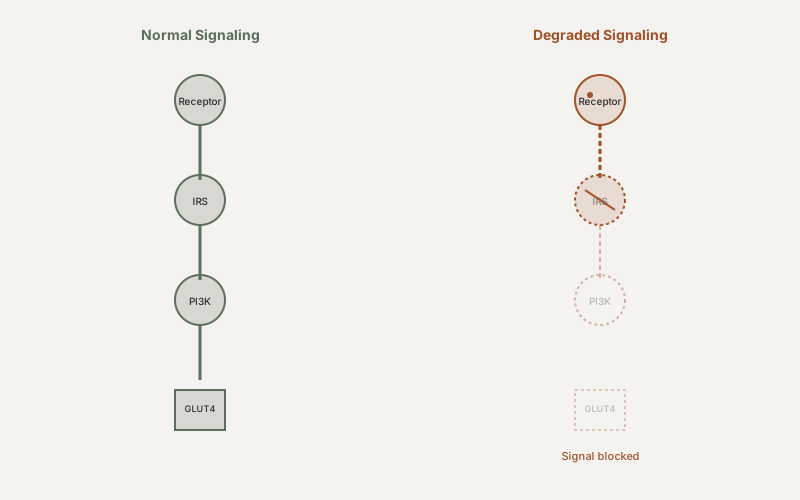
Insulin controls cellular glucose uptake by binding to receptors on cell membranes and triggering a complex signaling cascade. In healthy metabolism, this process operates efficiently: insulin binds, the receptor changes shape, downstream proteins activate, glucose transporters move to the cell surface, and sugar enters the cell for energy production or storage.
Chronic exposure to high glucose and compensatory hyperinsulinemia fundamentally alters this system. Insulin receptors decrease in number through a process called downregulation—the cell literally removes receptors from its surface in response to constant stimulation. Those receptors that remain become less responsive. The binding affinity weakens. The conformational changes that should trigger downstream signaling fail to occur properly.
Simultaneously, the intracellular signaling pathways deteriorate. Proteins like IRS-1 and IRS-2, which normally transmit the insulin signal deeper into the cell, undergo modifications that reduce their function. Serine phosphorylation—a chemical change induced by inflammatory stress—blocks these proteins from activating properly. The signal from insulin, even when it successfully binds to a receptor, fails to produce normal cellular response.
This is structural insulin resistance—resistance that exists not because of temporary metabolic imbalance but because cellular machinery has been physically altered. Simply lowering blood glucose or adding more insulin cannot restore function that has been degraded at the molecular architecture level. Muscle tissue particularly suffers from this progressive unresponsiveness, losing its role as a major glucose disposal site.
Mitochondrial Dysfunction and Energy Crisis
Mitochondria—the cellular structures responsible for converting glucose into usable energy—suffer profound damage in long-term diabetes. These organelles must process constant glucose excess, leading to overproduction of reactive oxygen species that damage mitochondrial DNA, proteins, and membranes.
As mitochondrial function declines, cells lose their ability to efficiently metabolize glucose even when it successfully enters the cell. Oxidative phosphorylation—the process that generates cellular energy—becomes impaired. Mitochondrial density decreases as damaged organelles are removed faster than they can be replaced. The cell enters a state of metabolic inefficiency where glucose availability is high but energy production is paradoxically low.
This mitochondrial dysfunction creates a vicious cycle. Impaired energy production triggers compensatory mechanisms that worsen insulin resistance. The cell, unable to properly utilize glucose, develops additional resistance to insulin signaling as a protective measure against glucose overload it cannot process. What began as energy production impairment becomes systemic metabolic failure affecting every cellular process that requires ATP.
Inflammatory Activation and Chronic Stress Response
Chronic hyperglycemia activates inflammatory pathways at the cellular level through multiple mechanisms. Glucose itself, at elevated concentrations, triggers stress responses in cellular organelles. The endoplasmic reticulum—responsible for protein folding and synthesis—becomes overwhelmed, activating stress pathways that release inflammatory cytokines.
These inflammatory signals create a state of low-grade chronic inflammation that pervades the entire metabolic system. Tumor necrosis factor alpha, interleukin-6, and other inflammatory mediators circulate at elevated levels. These molecules directly interfere with insulin signaling, creating additional insulin resistance independent of glucose levels.
This inflammatory state becomes self-perpetuating. Insulin resistance worsens, leading to higher glucose levels, which trigger more inflammation, which deepens insulin resistance further. Breaking this cycle requires addressing not just glucose but the inflammatory processes driving cellular dysfunction at deeper levels.
Advanced Glycation and Protein Modification
When glucose molecules encounter proteins in high concentration, they form covalent bonds through a process called glycation. These modified proteins, known as advanced glycation end products, accumulate throughout the body in long-term diabetes. They bind to receptors that trigger inflammatory responses. They cross-link with other proteins, creating structural rigidity in tissues that should remain flexible.
In blood vessels, glycated proteins reduce elasticity and promote atherosclerosis. In the kidneys, they damage filtration structures. In nerve tissue, they impair signal transmission. These modifications are largely irreversible—once proteins become glycated, the damage persists even after glucose normalizes. The half-life of some glycated proteins extends to months or years.
This protein modification represents one of the clearest examples of how diabetes operates beyond simple glucose elevation. Lowering blood sugar prevents new glycation but does not remove existing damage. The body must slowly replace glycated proteins through normal protein turnover—a process that can take considerable time and requires sufficient metabolic capacity that many long-term diabetics have lost.
Epigenetic Changes and Altered Gene Expression
Perhaps the most insidious aspect of cellular-level diabetes progression involves changes to gene expression that persist long after metabolic conditions improve. High glucose triggers modifications to the epigenome—the chemical marks on DNA that control which genes are active. Methyl groups attach to DNA in patterns that alter gene transcription. Histone proteins that package DNA undergo chemical modifications that change gene accessibility.
These epigenetic changes can become stable and self-propagating. Genes involved in inflammation remain constitutively active. Genes responsible for insulin sensitivity get permanently suppressed. Antioxidant defense genes fail to activate even under conditions of oxidative stress. The cell develops a "memory" of dysfunction that continues even when external glucose levels improve.
This phenomenon explains why glycemic control alone often fails to prevent complications in patients with long disease duration. Their cells have been reprogrammed at the genetic expression level. Restoration requires not just glucose normalization but intervention capable of addressing epigenetic modifications—work that operates on far longer timelines than standard diabetes management acknowledges.
The Necessity of Depth-Level Intervention
Recognition of diabetes as fundamentally a cellular dysfunction disease rather than a blood sugar disease demands treatment approaches that work at cellular and molecular levels. Glucose management remains necessary but insufficient. Medication that forces glucose down without addressing underlying cellular pathology produces controlled numbers while dysfunction deepens.
What becomes necessary is intervention designed to restore cellular function: reducing inflammatory load, supporting mitochondrial recovery, enhancing insulin signaling pathway repair, providing conditions where cells can slowly reverse epigenetic modifications. This work requires time, systematic progression, and respect for the biological complexity of cellular repair processes.
It also requires understanding that different patients will have different patterns of cellular dysfunction depending on their disease duration, genetic factors, and individual response to metabolic stress. Standardized approaches that ignore this variation cannot adequately address the depth of pathology present in advanced diabetes. Ayurvedic perspective: This is why Ayurvedic correction for long-standing diabetes targets not the glucose number, but the internal environment that generates it — restoring Agni, clearing Ama, and rebuilding Dhatu function layer by layer.