
The Mismatch Between Damage Timeline and Expectation Timeline
Diabetes develops over years or decades. Insulin resistance builds gradually. Beta cells deteriorate slowly. Organs adapt progressively. Complications emerge incrementally. The disease represents accumulated damage from thousands of days of metabolic dysfunction. Yet when patients decide to pursue reversal, expectation often centers on rapid correction measured in weeks or months.
This timeline mismatch creates inevitable frustration. Patients invest substantial effort—dietary changes, exercise, medication adherence, lifestyle modification—and expect proportional rapid results. When improvement appears slowly or initial enthusiasm meets biological reality of extended recovery timelines, disappointment and abandonment risk becomes high.
But biological repair operates on different timescales than pharmaceutical suppression. Medication can force glucose down within days. Genuine metabolic restoration—rebuilding insulin sensitivity, regenerating beta-cell capacity, clearing ectopic fat, reversing organ adaptation—requires months to years. The work proceeds at cellular and tissue levels where change happens gradually through normal biological processes that cannot be dramatically accelerated.
Understanding why reversal must be gradual helps maintain realistic expectations and sustained engagement. The slowness is not treatment failure but biological necessity. Attempting to force faster correction through aggressive intervention typically backfires, as discussed regarding forced correction dangers. Gradual progression, while requiring patience, provides safer and more sustainable improvement.
"Ayurveda encodes this understanding in the concept of Krama — the therapeutic sequence that proceeds according to the body's biological readiness rather than external timelines. Rushed correction produces Vikriti — new imbalance — rather than Prakriti restoration."
Ayurvedic Clinical Lens · Diabetes Reversal Clinic
Cellular Repair Processes Operate Slowly
Cells damaged by years of hyperglycemia, oxidative stress, and inflammation cannot instantly repair. Mitochondria must be cleared through autophagy and replaced through biogenesis—processes requiring weeks. Damaged proteins must degrade and be replaced through normal protein turnover—occurring over days to months depending on specific proteins. Epigenetic modifications must gradually remodel as cells divide and regulatory factors shift—potentially requiring many cell cycles.
Insulin signaling pathway restoration requires rebuilding degraded components. Receptor expression increases gradually through gene transcription and protein synthesis. Signal transduction proteins regenerate through normal cellular production processes. Glucose transporters must be synthesized and appropriately targeted to membranes. These molecular rebuilding projects proceed at rates determined by cellular machinery capacity, not by intervention intensity.
Beta-cell recovery exemplifies necessary gradual progression. Fatigued beta cells must rebuild secretory apparatus—synthesizing insulin, producing secretory granules, restoring glucose-sensing machinery. This regeneration occurs incrementally as cells recover from stress and regain capacity. Forcing rapid increased secretory demand before recovery completes risks pushing cells back into exhaustion or apoptosis.
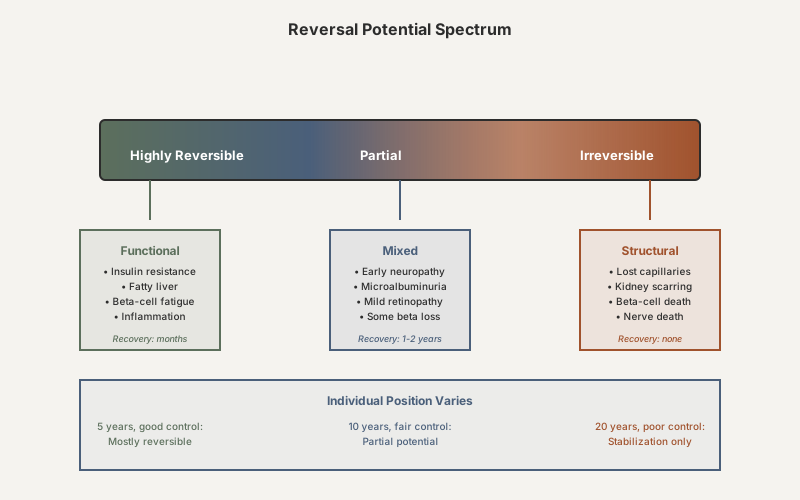
Organ-Level Recovery Timelines
Different organs show different recovery kinetics based on their regenerative capacity and turnover rates. The liver demonstrates relatively rapid improvement potential—fatty liver can show substantial resolution within three to six months of appropriate intervention. Hepatic cells turn over regularly and possess good regenerative capacity, allowing fairly quick functional restoration when stressors are removed.
Muscle tissue recovers more slowly. Mitochondrial biogenesis in muscle requires months of sustained metabolic improvement and appropriate exercise stimulus. Fiber type shifts from glycolytic to oxidative patterns occur gradually over six months to a year. Intramyocellular lipid clears progressively as both fat storage decreases and oxidative capacity increases. Full muscle metabolic restoration may require one to two years.
Pancreatic recovery timelines vary with severity of initial dysfunction. Moderately fatigued beta cells may show functional improvement within months as secretory burden reduces. Severely stressed cells or those recovering from near-apoptotic states require longer—potentially a year or more to rebuild adequate capacity. Complete regeneration of lost beta-cell mass essentially never occurs in adults.
Vascular recovery proceeds slowly due to limited endothelial turnover and repair capacity. Early endothelial dysfunction may reverse within months. Established structural vascular damage shows minimal reversibility. Improvements in vascular function that do occur typically manifest over one to two years as chronic inflammation resolves and oxidative stress decreases, allowing gradual endothelial restoration.
The Danger of Destabilizing Fragile Equilibrium
Long-term diabetes establishes pathological equilibrium—a stable if dysfunctional metabolic state. Organs have adapted to abnormal conditions. Regulatory systems have recalibrated around disordered parameters. Hormonal and neural responses have reset to new baselines. This equilibrium, while unhealthy, is stable. The body has learned to function within these constraints.
Rapid intervention destabilizes this equilibrium faster than the body can establish new stable patterns. The result is metabolic chaos—wild glucose swings, severe symptoms, dangerous complications. Attempting to force quick transition from pathological stability to normal function creates a dangerous unstable transition period that the compromised system cannot safely navigate.
Gradual correction allows equilibrium to shift incrementally. Small changes consolidate before additional changes layer on. At each stage, a new stable state establishes—less pathological than before but stable enough that the body functions adequately. This stepwise progression through a series of progressively healthier stable states proves far safer than attempting to jump directly from severe dysfunction to normal function.
Preventing Rebound and Regression
Aggressive rapid correction often produces initial dramatic improvement followed by eventual regression. The forced change creates temporary suppression of dysfunction without genuine repair. Once the forcing intervention eases—as it inevitably must given unsustainability of extreme measures—underlying unrepaired pathology reasserts itself. Rebound worsening frequently exceeds initial levels.
Gradual correction with consolidation at each stage prevents rebound. Each improvement phase allows actual biological repair rather than mere suppression. When that repair solidifies before additional intervention, the gains become permanent rather than temporary. The improvement does not depend on unsustainable extreme measures but rather on genuine capacity restoration that persists.
This principle applies across intervention types. Gradual weight loss with maintenance phases produces more sustainable results than rapid crash weight loss. Progressive medication reduction following internal improvement maintains stability while premature aggressive reduction risks dangerous rebound. Staged dietary modification allows adaptation while sudden extreme restriction typically proves unsustainable.
Allowing Metabolic Adaptation to Accumulate
Beneficial adaptations to improved metabolic conditions accumulate over time through normal biological processes. Improved insulin sensitivity today enables slightly better glucose disposal, which reduces cellular stress, which allows marginally better mitochondrial function, which enhances insulin sensitivity further. These positive cycles require time to iterate and amplify.
Attempting to force maximum adaptation immediately through aggressive intervention overwhelms cellular capacity to adapt. The stimuli arrive too rapidly and intensely for biological systems to respond appropriately. Instead of beneficial adaptation, stress responses activate. The intended positive cycles do not initiate because the intensity exceeds adaptation capability.
Gradual intervention allows beneficial adaptations to accumulate through repeated cycles. Modest intervention produces modest improvement. That improvement enables slightly more intervention tolerance. The new slightly-better state allows next increment of improvement. Over months, these compounding incremental adaptations achieve substantial total improvement that aggressive intervention could not.
Respecting Individual Recovery Capacity
Recovery rates vary substantially between individuals based on age, genetic factors, disease severity, overall health status, and stress burden. Younger patients with good regenerative capacity may progress more rapidly. Elderly patients or those with multiple comorbidities require longer recovery timelines. Ignoring individual capacity variation and applying universal rapid timelines creates failure.
Additionally, recovery capacity itself improves during the correction process. Early in reversal work, metabolic systems are severely compromised and can tolerate minimal change. As initial improvements occur, capacity to handle additional change increases. Later stages of correction can proceed slightly faster than initial stages because the body has regained capacity to manage change.
This means intervention pacing should be individualized and dynamic. Assessment of current capacity guides appropriate pace. As capacity improves, pace may moderately accelerate. If signs of stress or intolerance appear, pace slows. The approach respects where each patient is biologically rather than imposing predetermined timelines regardless of individual readiness.
Building Sustainable Lifestyle Changes
Lasting reversal requires permanent lifestyle changes. Behaviors that create improvement must continue indefinitely to maintain that improvement. Gradual behavior change proves far more sustainable than dramatic sudden transformation. Adding one dietary modification, allowing adaptation, then adding another creates manageable progressive change. Attempting to overhaul everything simultaneously typically leads to overwhelm and abandonment.
The gradual approach also allows learning and refinement. Each small change provides feedback—what works for this individual, what proves difficult, what adjustments are needed. This iterative learning creates progressively optimized personal approaches. Forced rapid change does not allow this learning period, often resulting in inappropriate long-term strategies that cannot sustain.
Psychological adaptation to new behaviors also requires time. Habits form through repetition over weeks to months. Attempting too many new behaviors simultaneously prevents adequate habit formation. Gradual introduction allows each behavior to become habitual before adding the next, creating stable behavior change rather than temporary compliance.
Medication Reduction Must Follow Internal Improvement
Progressive medication reduction represents objective evidence of genuine reversal, but reduction must lag internal improvement—not drive it. Medications decrease gradually as recovered internal capacity makes them less necessary. Attempting to reduce medication faster than internal improvement occurs risks dangerous destabilization.
The appropriate sequence involves: first, metabolic parameters improve while maintaining full medication; second, improvement stabilizes demonstrating sustainable internal capacity; third, medication reduces slightly while monitoring for stability; fourth, the cycle repeats as capacity continues improving. Each medication reduction is modest, well-monitored, and reversible if needed.
This conservative stepwise reduction prevents the common pattern of premature medication reduction followed by metabolic decompensation requiring medication resumption at higher doses. The gradual approach may frustrate patients eager to eliminate medications quickly, but it provides safe, sustainable reduction that does not require reversal due to inadequate internal capacity. Ayurvedic perspective: The gradual timeline of Ayurvedic correction is not a limitation — it is a feature. Biological repair at the Dhatu level operates on its own schedule, and effective treatment means working with that schedule rather than attempting to override it.