
The Temptation of Aggressive Intervention
When diabetes has progressed to advanced stages with complications emerging or accelerating, both patients and physicians feel urgency to correct metabolic dysfunction rapidly. The logic appears sound: if years of poor glucose control caused the damage, then achieving tight control immediately should halt or reverse that damage. This reasoning drives intensive treatment strategies—rapid medication escalation, strict dietary restriction, aggressive exercise protocols—designed to force quick metabolic improvement.
This aggressive approach works reasonably well in early diabetes where metabolic systems retain flexibility and resilience. A newly diagnosed patient with minimal insulin resistance and adequate pancreatic reserve can tolerate intensive intervention. Their systems can adapt to rapid metabolic changes because compensatory capacity still exists. Forcing quick improvement stresses systems that can handle stress.
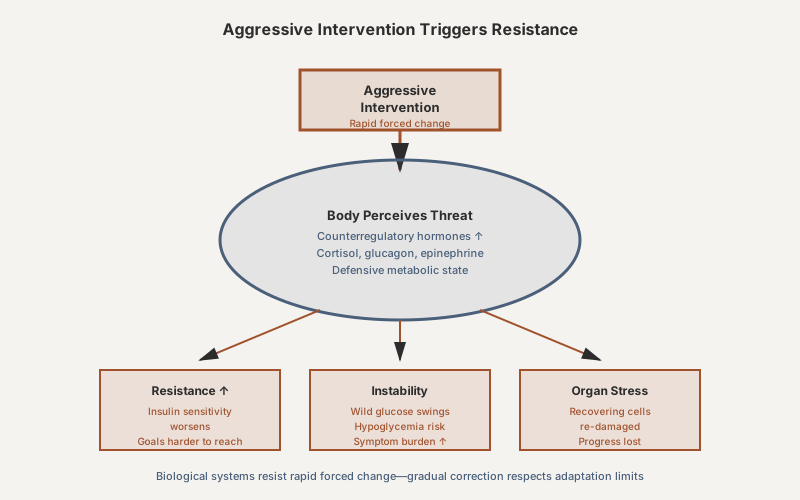
But long-term diabetes creates entirely different biology. Metabolic systems have operated under stress for years. Compensatory mechanisms have exhausted. Organs function at or beyond their sustainable limits. Cellular adaptation has locked dysfunction into place. Attempting to force rapid change in these compromised systems does not produce the desired correction—it triggers defensive responses that worsen outcomes.
The fundamental error is treating chronically adapted dysfunction as if it were acute and readily reversible. A body that has spent fifteen years learning to operate in a disordered state cannot suddenly unlearn those patterns because medication or behavior changes abruptly. The forced change exceeds biological adaptation capacity, triggering resistance mechanisms that defeat the intervention's purpose.
"Ayurveda calls this Viruddha Chikitsa — treatment that contradicts the body's current state. When exhausted tissues are pushed harder than their repair capacity allows, the body's protective responses override the intervention. Gentleness is not weakness; it is clinical precision."
Ayurvedic Clinical Lens · Diabetes Reversal Clinic
Counterregulatory Hormone Activation
The body maintains multiple hormonal systems designed to prevent dangerous glucose fluctuations. When glucose drops rapidly—even from pathologically high to normal levels—these counterregulatory systems activate. Glucagon secretion increases. Cortisol and growth hormone rise. Epinephrine and norepinephrine surge. These hormones mobilize glucose stores, increase glucose production, and reduce glucose disposal.
In healthy individuals, counterregulatory activation is brief and appropriate. But in long-term diabetics, particularly those with autonomic neuropathy, these responses become exaggerated and prolonged. A glucose drop that healthy counterregulation would handle smoothly triggers excessive hormone release in damaged regulatory systems. The overreaction creates glucose instability—swings from hypoglycemia to rebound hyperglycemia and back.
This phenomenon explains why intensive insulin therapy aiming for near-normal glucose often produces worse outcomes in advanced diabetes. The aggressive glucose lowering triggers repeated counterregulatory activation. Each episode generates oxidative stress, inflammatory activation, and metabolic chaos more damaging than the stable moderate hyperglycemia being "corrected." The treatment becomes more harmful than the condition it addresses.
Additionally, chronic counterregulatory activation perpetuates insulin resistance. Cortisol, growth hormone, and catecholamines all worsen insulin sensitivity. Attempting to force glucose down with increasing insulin doses while counterregulatory hormones simultaneously drive resistance creates an escalating pharmaceutical arms race that the patient cannot win. The body resists the forced correction through hormonal mechanisms that make correction progressively more difficult.
Metabolic Adaptation and Set Point Defense
Long-term diabetes establishes new metabolic set points—stable equilibria around which the body regulates despite being pathological. A patient with fifteen years of HbA1c around 9% has adapted to that level. Cellular systems have recalibrated. Hormonal responses have reset. Metabolic pathways have found new operating parameters. The body defends this set point despite it being unhealthy because it represents known, stable territory.
Attempting to rapidly shift set points triggers defensive mechanisms. When glucose drops suddenly from the adapted level, the body interprets this as abnormal and dangerous—it perceives the healthy glucose level as hypoglycemia because that's far from its established set point. This perception activates hunger, fatigue, anxiety, and powerful drives to consume glucose. The patient experiences severe symptoms at glucose levels that should feel normal.
Weight set point defense operates similarly. Years of elevated weight establish new regulatory targets. Rapid weight loss through aggressive caloric restriction triggers metabolic adaptation—reduced metabolic rate, increased hunger hormones, enhanced nutrient absorption efficiency. The body fights to return to its set point through mechanisms that make continued weight loss exponentially more difficult and eventual regain highly probable.
These set point defenses explain why dramatic short-term interventions—crash diets, extreme exercise programs, intensive medication escalation—typically fail in long-term diabetes. They generate initial improvement through sheer force but cannot overcome biological set point defense. The body eventually reasserts its adapted equilibrium, often with rebound worsening beyond initial levels.
Cellular Stress From Rapid Metabolic Shifts
Cells adapted to chronic hyperglycemia develop specific compensatory mechanisms to survive in that hostile environment. They upregulate certain metabolic pathways. They modify their antioxidant systems. They alter membrane composition and transporter expression. These adaptations allow survival but create dependence—cells cannot suddenly function normally when the environment rapidly normalizes.
When glucose drops quickly through aggressive intervention, adapted cells experience this as acute stress. Pathways upregulated for high-glucose conditions now operate inappropriately in normalized glucose. Metabolic flux through alternative pathways creates unusual metabolite accumulation. Energy production stumbles as mitochondria struggle to shift from adapted to normal function. The rapid transition generates oxidative stress and cellular damage.
This cellular-level stress manifests clinically in multiple ways. Patients report severe fatigue as cellular energy production falters during metabolic transition. Cognitive function declines as brain cells struggle to adapt. Muscle weakness emerges as myocytes cannot generate normal ATP under rapidly changing conditions. The symptoms often convince patients that tight control is harming them—and in the short term, the rapid transition is indeed stressful.
Additionally, rapid metabolic shifts can precipitate acute complications. Sudden glucose normalization in the context of existing retinopathy can paradoxically worsen vision through temporary changes in lens refraction and retinal perfusion. Aggressive blood pressure reduction in patients with cerebral vascular disease risks stroke through hypoperfusion. The body adapted to pathological states cannot safely tolerate abrupt correction to normal.
The Problem of Simultaneous Multi-System Stress
Comprehensive diabetes management requires addressing multiple systems: glucose regulation, lipid metabolism, blood pressure control, inflammation reduction, weight management. In early disease, simultaneous intensive intervention across all domains is feasible. Metabolic systems retain capacity to handle multiple changes.
Advanced diabetes limits simultaneous change tolerance. Each intervention imposes stress. Starting multiple medications simultaneously creates additive side effects and complicated dose-titration challenges. Combining aggressive dietary restriction with intensive exercise while rapidly escalating medications overwhelms adaptive capacity. The cumulative stress exceeds what compromised systems can manage.
This multi-system overload manifests as treatment intolerance. Patients cannot maintain aggressive interventions. They experience unmanageable side effects. Compliance collapses under the burden. What appears as patient failure actually reflects biological reality—the interventions demand more adaptation than damaged systems can provide. The body signals its limits through symptoms and treatment failure.
Effective intervention in advanced disease requires sequential rather than simultaneous change. Address one or two systems initially, allowing adaptation before adding additional interventions. This staged approach respects biological capacity limits. It allows monitoring of individual intervention effects. It prevents the overwhelming multi-front assault that triggers defensive shutdown and treatment abandonment.
When Aggressive Correction Proves Dangerous
Certain clinical situations make aggressive intervention not just ineffective but actively dangerous. Patients with severe autonomic neuropathy cannot appropriately regulate cardiovascular responses to metabolic changes. Rapid glucose shifts risk dangerous blood pressure fluctuations and cardiac arrhythmias. The damaged autonomic nervous system cannot provide protective responses during metabolic transition.
Advanced kidney disease creates medication clearance problems. Drugs that normally exit through renal filtration accumulate to toxic levels when kidney function is severely reduced. Aggressive medication escalation in this context risks overdose and acute complications. The impaired kidneys cannot handle the pharmaceutical burden of intensive treatment.
Elderly patients with multiple comorbidities lack physiological reserve to buffer aggressive intervention. Their cardiovascular systems cannot tolerate the stress of rapid metabolic changes. Their cognitive function may deteriorate with tight glucose control due to reduced cerebral glucose availability. Their nutritional status may worsen with aggressive dietary restriction. The benefits of intensive control do not justify the risks in patients with limited life expectancy and multiple competing health issues.
In these vulnerable populations, moderate control achieved gently proves safer than aggressive control attempted forcefully. Accepting HbA1c of 8% reached gradually and maintained stably beats forcing toward 6.5% through intensive means that risk hypoglycemia, medication toxicity, and acute destabilization. Clinical judgment must recognize when therapeutic aggression crosses into therapeutic harm.
The Alternative: Gradual Progressive Correction
If forcing rapid correction backfires, what approach works? Gradual progressive correction respects biological adaptation timelines. Small consistent changes accumulate over months and years, allowing systems to adapt incrementally. Each modest improvement consolidates before additional change layers on top.
This gradual approach appears slower but ultimately achieves more. The body adapts to each small change without triggering defensive resistance. Metabolic set points shift incrementally rather than being forced against active defense. Cells gradually transition between metabolic states without acute stress. The final improvement may take longer to achieve but proves more stable and sustainable.
Practical implementation means accepting intermediate targets. Rather than immediately pursuing HbA1c below 7%, a patient with baseline 10% might initially target 8.5%. After several months of stable achievement, the target lowers to 8%. Additional months of consolidation precede another incremental improvement. The stepwise approach allows biological adaptation at each stage.
This requires patience from both patient and physician. Modern medical culture favors rapid results. Insurance systems and clinical guidelines emphasize achieving targets quickly. But biological reality—particularly in advanced diabetes—demands time for genuine repair rather than forced suppression. The investment in gradual correction pays dividends through sustainable improvement rather than transient forced changes followed by rebound deterioration.
Recognizing When to Moderate Intensity
Certain signs indicate that intervention intensity exceeds biological tolerance and should moderate. Severe hypoglycemia indicates glucose lowering has outpaced the body's adaptation capacity. Persistent symptoms despite improved numbers suggest metabolic transition stress. Inability to maintain interventions signals excessive burden. These are not failures to try harder—they are biological feedback demanding intervention moderation.
Progressive complications despite intensive treatment suggest that forcing metabolic parameters into target ranges does not address underlying pathology. The numbers improve through pharmaceutical force while deep dysfunction continues. This pattern indicates need for different intervention approach—not more aggressive pursuit of same targets but fundamental strategy change addressing root causes.
Patient quality of life deteriorating under intensive management raises crucial questions about treatment goals. If achieving tight control requires such extreme measures that life becomes dominated by diabetes management, the intervention may cause more harm than benefit. Balance between glycemic targets and livability must guide intensity decisions, particularly in patients with limited remaining lifespan or multiple competing health priorities. Ayurvedic perspective: The Ayurvedic principle of Krama — therapeutic sequencing — exists precisely because of this: correction proceeds in the order and at the pace that biological readiness permits, not at the pace that impatience demands.