
The Spectrum of Beta-Cell Dysfunction
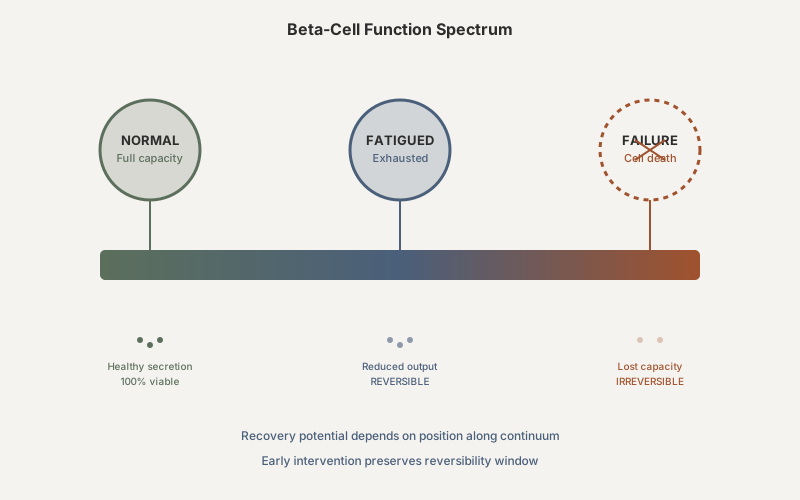
Pancreatic beta cells—the specialized cells responsible for insulin production—do not simply function normally or fail completely. They exist along a continuum from full functional capacity through various stages of impairment to irreversible destruction. Understanding where a patient's beta cells lie on this spectrum determines what correction is biologically possible and what intervention approach is appropriate.
At one end of the spectrum lies pancreatic fatigue: beta cells remain alive and structurally intact but operate in a state of functional exhaustion. They have been forced into chronic overproduction to compensate for insulin resistance. They experience ongoing metabolic stress from high glucose exposure. Their insulin secretory capacity has declined not because cells have died but because surviving cells have become depleted, dysfunctional, and unable to maintain normal output.
At the opposite end lies pancreatic failure: substantial beta-cell mass has been permanently lost through apoptosis—programmed cell death. The remaining beta cells, regardless of their functional state, are insufficient in number to meet insulin demands. No amount of rest, metabolic improvement, or functional recovery can restore capacity that depends on cell populations that no longer exist.
Most long-term diabetics occupy the middle ground—some beta-cell loss has occurred, reducing absolute capacity, while remaining cells operate in varying degrees of functional impairment. The ratio between reversible fatigue and irreversible loss determines correction potential. A pancreas with 70% of beta cells remaining in a fatigued state has far greater recovery possibility than one with 30% remaining cells, even if those 30% are functioning well.
"Ayurveda distinguishes between Agni that is merely diminished — Manda Agni — and Agni that has been extinguished. The pancreas in early-stage exhaustion still possesses correctable Agni deficiency. Advanced failure represents a different clinical reality requiring honest reassessment of goals."
Ayurvedic Clinical Lens · Diabetes Reversal Clinic
Mechanisms of Beta-Cell Exhaustion
Beta-cell fatigue develops through chronic demand exceeding sustainable capacity. In the setting of insulin resistance, beta cells must produce several times normal insulin output to maintain glucose control. This compensatory hypersecretion succeeds initially—glucose levels stay relatively normal despite underlying resistance. But hypersecretion imposes severe metabolic stress on beta cells themselves.
The endoplasmic reticulum—the cellular structure responsible for synthesizing and folding insulin protein—becomes overwhelmed. Misfolded proteins accumulate, triggering endoplasmic reticulum stress responses. These stress pathways activate inflammatory signaling and can eventually trigger apoptosis if stress persists. The cell's protein synthesis machinery literally cannot keep pace with insulin production demands.
Simultaneously, high glucose exposure creates oxidative stress within beta cells. Glucose metabolism generates reactive oxygen species that damage cellular components. Beta cells have relatively weak antioxidant defenses compared to other cell types, making them particularly vulnerable. Years of oxidative damage impairs mitochondrial function, reduces ATP production, and degrades the cellular machinery needed for insulin secretion.
Chronic inflammation worsens beta-cell stress. Inflammatory cytokines released by fat tissue and immune cells infiltrate pancreatic islets. These molecules directly impair beta-cell function and increase susceptibility to apoptosis. The beta cell finds itself under simultaneous attack from multiple directions: excessive secretory demand, glucose toxicity, oxidative damage, and inflammatory assault.
Under these conditions, beta cells enter a protective state of reduced function. Insulin secretion capacity declines. Glucose-sensing mechanisms become blunted. The cell downregulates its secretory apparatus to prevent complete breakdown. This represents fatigue—not permanent loss of capacity but temporary shutdown to prevent destruction. The question becomes whether this protective shutdown can be reversed or whether it will progress to permanent failure.
The Transition From Fatigue to Failure
Fatigued beta cells can recover if metabolic conditions improve before irreversible damage occurs. Reducing insulin demand through improved insulin sensitivity allows beta cells to reduce secretory burden. Lowering glucose exposure removes glucose toxicity. Decreasing inflammatory load reduces cellular stress. Under these improved conditions, fatigued beta cells can gradually restore function—increasing insulin secretory capacity, rebuilding cellular machinery, recovering sensitivity to glucose signals.
But if adverse conditions persist too long, fatigue progresses to failure. The tipping point occurs when cellular stress pathways activate apoptosis—programmed cell death. Once apoptosis initiates, the cell is lost permanently. Beta cells do not regenerate substantially in adults. Small amounts of new beta-cell formation occur, but rates are far too slow to replace cells lost to apoptosis in advanced diabetes.
Clinical observation of progressive medication requirements often signals this transition. Initially, modest medication doses restore glucose control by reducing beta-cell burden. As beta-cell mass declines, higher doses become necessary. Eventually, even maximum medication cannot adequately compensate, and insulin injections become required. This progression documents the shift from reversible fatigue to irreversible loss.
The critical insight is that this transition is not inevitable. Early in disease, when fatigue predominates and loss is minimal, intervention can prevent progression to failure. Later, when substantial loss has occurred, intervention can slow further decline but cannot restore lost capacity. The window for maximum recovery narrows over time, making early aggressive intervention far more effective than delayed treatment.
Clinical Assessment of Remaining Capacity
Distinguishing fatigue from failure clinically proves challenging because both present as inadequate insulin secretion. Standard glucose and HbA1c measurements reveal only that insulin production is insufficient—they cannot determine whether insufficiency reflects exhaustion of living cells or loss of cell populations.
C-peptide measurement provides more information. C-peptide is released in equal amounts to insulin during hormone production, and unlike insulin, is not cleared rapidly by the liver. Measuring C-peptide levels—particularly in response to stimulation—indicates how much insulin the pancreas can produce. High C-peptide with poor glucose control suggests insulin resistance overwhelming adequate secretion. Low C-peptide indicates true pancreatic insufficiency.
But C-peptide alone cannot distinguish fatigue from failure. Low values may reflect either depleted cell populations or exhausted but living cells. Response patterns provide additional insight: if C-peptide increases substantially when metabolic conditions improve, fatigue likely predominates. If C-peptide remains persistently low despite intervention, significant beta-cell loss has likely occurred.
Clinical history offers important clues. Disease duration matters—those with five years of diabetes have likely retained more beta cells than those with twenty years. Medication progression patterns inform assessment—rapid escalation to insulin suggests faster beta-cell loss. Response to previous interventions provides evidence—patients who achieved good control with minimal medication likely retain better pancreatic reserve than those requiring aggressive treatment from diagnosis.
Recovery Potential and Intervention Strategy
When fatigue predominates and beta-cell mass remains relatively preserved, correction strategies focus on reducing cellular stress and allowing functional recovery. This requires addressing all factors contributing to beta-cell burden: improving insulin sensitivity to reduce secretory demand, minimizing glucose exposure to eliminate toxicity, reducing inflammatory load to decrease cellular stress, supporting cellular repair mechanisms through appropriate metabolic support.
Recovery occurs gradually as fatigued beta cells rebuild capacity. Initial improvement may be minimal while cells repair damaged machinery. Measurable functional restoration typically requires months as cellular structures regenerate, protein synthesis capacity recovers, and glucose-sensing mechanisms normalize. Expecting rapid recovery from years of fatigue is biologically unrealistic—beta-cell restoration operates on timelines measured in seasons, not weeks.
When substantial beta-cell loss has occurred and failure predominates, expectations must adjust accordingly. Lost cells will not return. The goal becomes preventing further loss and maximizing function of remaining cells. This still requires reducing metabolic burden and cellular stress, but the ceiling on recovery potential is lower. Patients may achieve substantial improvement but are unlikely to completely eliminate insulin requirements if inadequate beta-cell mass remains.
The critical mistake is applying recovery-focused intervention to patients with predominant failure, or using failure-management approaches for those with recoverable fatigue. Correct assessment of the fatigue-failure ratio allows appropriate goal-setting and intervention design tailored to actual biological potential.
Preventing Progression of Fatigue to Failure
The most valuable intervention opportunity lies in preventing fatigued beta cells from progressing to apoptosis. Once cells die, they cannot be recovered. But while they remain alive—even in stressed, hypo-functional states—they retain recovery potential if conditions improve.
Prevention requires early identification of beta-cell stress before substantial loss occurs. This means intervening at stages when patients may feel relatively well and glucose control appears acceptable with medication. The natural tendency is to continue current management as long as it maintains reasonable numbers. But this approach allows continued beta-cell stress and progressive loss until failure becomes evident—at which point intervention cannot restore lost capacity.
More aggressive early intervention—aimed not just at controlling glucose but at reducing beta-cell burden and stress—can preserve beta-cell mass that will otherwise be lost. This may involve more intensive insulin sensitivity improvement, more aggressive inflammatory reduction, earlier adoption of beta-cell protective medications, or integration of approaches specifically designed to reduce pancreatic stress.
The challenge is convincing patients and physicians to pursue intensive intervention before obvious need arises. But from a beta-cell preservation perspective, waiting until control deteriorates despite maximum conventional treatment means waiting until substantial irreversible loss has occurred. By that point, intervention can only slow further decline—it cannot recover what has been destroyed.
Systemic Context of Pancreatic Dysfunction
Beta-cell fatigue and failure do not occur in isolation. Pancreatic dysfunction exists within a broader context of multi-organ metabolic failure. Hepatic insulin resistance increases the insulin demand beta cells must meet. Muscle glucose uptake impairment means more glucose stays in circulation, exposing beta cells to higher toxicity. Adipose tissue inflammation generates cytokines that directly damage beta cells.
This systemic nature means pancreatic restoration cannot occur independently of broader metabolic correction. Attempting to protect or recover beta cells while severe insulin resistance persists means maintaining high secretory demands that prevent recovery. Addressing inflammation in other tissues while ignoring inflammatory drivers in pancreatic islets provides incomplete protection.
Effective intervention therefore requires coordinated multi-system correction: improving hepatic and muscular insulin sensitivity to reduce insulin demands, addressing inflammatory sources that stress beta cells, correcting hormonal imbalances that worsen beta-cell function, supporting cellular repair mechanisms throughout affected tissues. Beta-cell recovery occurs as one component of comprehensive metabolic restoration rather than as an isolated target. Ayurvedic perspective: This distinction — between fatigue and failure, between Manda Agni and depleted Agni — is precisely what Ayurvedic constitutional assessment is designed to identify, shaping both the therapeutic approach and the realistic expectations set with the patient.