
Beyond Average Values to Pattern Recognition
Standard diabetes metrics focus on averages: average glucose over three months (HbA1c), average blood pressure, average lipid levels. These averages provide useful population-level data and simplify clinical decision-making. But averages conceal the patterns beneath them—patterns that reveal whether apparent control reflects genuine metabolic health or fragile pharmaceutical suppression.
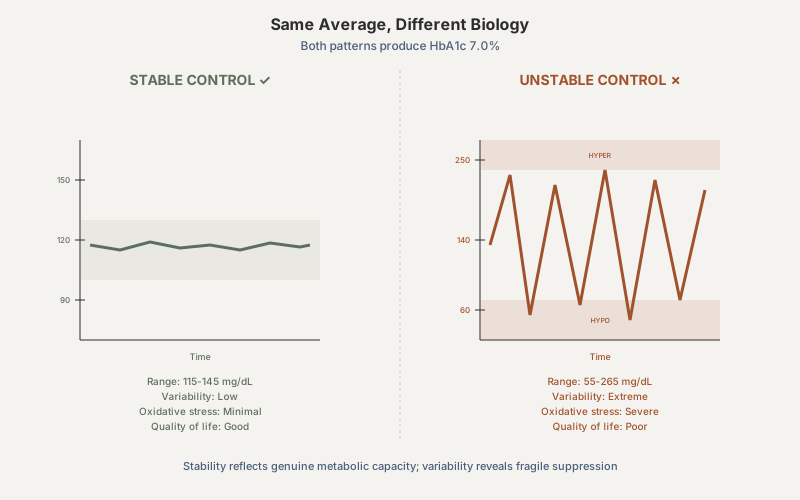
Two patients with identical HbA1c of 7% may show fundamentally different glucose patterns. One maintains relatively stable glucose between 120-160 mg/dL with modest post-meal excursions and no hypoglycemia. The other swings between 60 and 250 mg/dL multiple times daily—dramatic spikes after meals, severe drops from medication, wild variability from day to day. The average calculation produces the same HbA1c despite radically different metabolic states.
The patient with stable modest elevation demonstrates genuine if imperfect metabolic control. Their organs coordinate responses appropriately. Compensation mechanisms function adequately. The system maintains equilibrium despite not being perfectly normal. This stability reflects internal capacity to self-regulate.
The patient with dramatic swings shows fragile control depending on precise external management. Any deviation from rigid routine—meal timing variation, stress, illness, medication timing shift—produces chaotic response. Their apparent control is pharmaceutical suppression superimposed on dysfunctional metabolism, not restored regulatory capacity. The instability reveals the underlying dysfunction that suppression masks.
"Ayurveda uses the concept of Sama Dosha — balanced Dosha — as its primary marker of health, not the absence of symptoms. Consistent metabolic stability across varying conditions is exactly this: evidence that internal regulatory capacity has genuinely rebuilt, not merely been pharmaceutically maintained."
Ayurvedic Clinical Lens · Diabetes Reversal Clinic
Glucose Variability as Pathology Indicator
Glucose variability—the magnitude of glucose swings independent of average level—correlates with oxidative stress, inflammatory activation, and complication risk. Large fluctuations generate reactive oxygen species bursts more damaging than stable elevation. Each rapid rise and fall cycle activates stress pathways, damages endothelium, and accelerates atherosclerosis.
This variability pathology explains why some patients with reasonable average glucose develop severe complications while others with poorer averages but more stability fare better. The chaos of fluctuation drives damage through mechanisms that stable moderate hyperglycemia does not trigger as intensely. Variability, not just elevation, determines complication trajectory.
Continuous glucose monitoring reveals variability that intermittent fingerstick testing misses. A patient checking fasting and pre-meal glucose may see acceptable values while missing severe post-meal spikes and nocturnal hypoglycemia. The spot checks capture stable moments while variability occurs between measurements. This hidden instability proceeds unrecognized and unaddressed.
Reducing variability often proves more important than reducing average glucose. A patient with HbA1c of 7.5% and minimal variability may be healthier than one with HbA1c of 6.5% achieved through aggressive medication causing frequent hypoglycemia and rebound hyperglycemia. The stability, not the average, determines actual metabolic health and complication risk.
Stress Tolerance as Capacity Marker
Metabolic stability under varying conditions demonstrates regulatory capacity. Healthy metabolism handles stress—illness, emotional upset, schedule disruption, dietary variation—without dramatic glucose perturbation. Compensatory mechanisms buffer against challenges, maintaining reasonable equilibrium despite changing conditions.
Fragile control collapses under stress. A patient whose glucose remains acceptable under rigid routine shows dramatic instability with minor deviation. Illness sends glucose soaring. Schedule changes create hypoglycemia. Emotional stress produces hours of dysregulation. This fragility indicates that apparent control depends entirely on eliminating variability rather than possessing capacity to handle it.
Improving stress tolerance marks genuine reversal. Early in correction, strict routine may be necessary to maintain stability. As internal capacity restores, tolerance for variation increases. The patient can handle schedule changes, dietary flexibility, illness without catastrophic glucose disruption. This resilience proves that self-regulatory capacity has improved, not just that suppression is maintaining forced control.
Testing stress tolerance provides assessment tool. A planned deviation from routine—skipped meal, exercise timing change, modest dietary indiscretion—reveals response capacity. If glucose remains relatively stable, self-regulation functions adequately. If dramatic instability results, more corrective work is needed before that level of metabolic flexibility is safe.
Energy and Symptom Stability
Beyond glucose patterns, overall energy and symptom stability indicates metabolic health quality. Patients with genuine metabolic improvement report consistent energy through the day. They do not experience dramatic post-meal fatigue or mid-afternoon crashes. Their mental clarity remains stable. Physical capacity is predictable.
Unstable metabolism produces unstable experience. Energy fluctuates wildly. Some hours feel normal; others bring overwhelming fatigue. Cognitive function varies dramatically. Physical capability is unpredictable—able to exercise one day, exhausted the next despite similar circumstances. These experiential fluctuations reflect the underlying metabolic chaos that laboratory averages conceal.
As reversal progresses, subjective stability often improves before objective glucose stability fully normalizes. Patients report feeling more consistent even when glucose variability remains somewhat elevated. This suggests that metabolic stability extends beyond glucose to encompass broader cellular energy production, inflammatory status, and hormonal regulation—all contributing to experiential quality.
Tracking these subjective parameters provides important progress markers. Patients maintaining symptom logs often notice gradual stability improvement that laboratory testing does not yet fully capture. This experiential data validates that internal changes are occurring even when standard metrics show modest changes. The stability trajectory predicts eventual objective improvement.
Medication Requirement Stability
Medication requirements that constantly adjust signal unstable underlying control. Patients whose insulin doses change frequently, whose oral medications escalate and de-escalate, whose treatment regimen requires continuous modification demonstrate that pharmaceutical intervention cannot establish stable compensation for chaotic underlying dysfunction.
Stable medication requirements—even if not yet reduced—indicate that a consistent intervention level maintains adequate control. The body responds predictably to treatment. Dose adjustments become infrequent. This pharmaceutical stability, while not as ideal as medication reduction, represents meaningful improvement over constant dose chasing attempting to manage unpredictable metabolic chaos.
Progressive medication reduction with maintained stability provides the strongest evidence of genuine reversal. Doses decrease while control improves or maintains, demonstrating that internal capacity has restored sufficiently to require less external support. The stability through reduction confirms the reduction reflects genuine healing rather than inadequate treatment.
The Limitation of Forcing Stability
Some treatment approaches attempt to force stability through eliminating all sources of variability: rigid meal schedules, identical daily routines, strict carbohydrate restrictions, intensive glucose monitoring with constant micro-adjustments. This externally imposed rigidity can produce stable glucose readings at substantial quality of life cost.
Such forced stability differs fundamentally from inherent metabolic stability. It depends entirely on maintaining extreme external control. Any relaxation produces immediate instability because underlying self-regulatory capacity has not improved. The patient becomes prisoner to routine, unable to tolerate normal life variation.
Genuine stability allows reasonable life flexibility. Patients can vary meal timing within broad windows. They can adjust carbohydrate intake based on activity and hunger. They can handle schedule disruption without glucose catastrophe. This flexibility reflects internal regulatory capacity that buffers against variation rather than requiring its elimination.
The goal is not rigidity but resilient stability—glucose that remains reasonably controlled across varying conditions because internal systems can compensate for changes. This resilience enables normal life participation rather than requiring life accommodation to diabetes management demands. Resilient stability represents far superior outcome than rigid forced stability.
Interpreting Stability Improvement
When metabolic stability begins improving during reversal work, it indicates multiple positive changes: reduced inflammatory burden allowing more consistent cellular function, improved insulin signaling creating more predictable glucose disposal, better pancreatic reserve providing appropriate insulin responses, enhanced hepatic regulation maintaining glucose production balance.
These improvements manifest gradually. Early correction may show only modest stability gains—fewer severe fluctuations even if baseline variability remains elevated. Middle stages show dampened response to stressors—glucose still rises with illness or stress but less dramatically and recovers faster. Advanced stages demonstrate resilient stability—minimal glucose perturbation even with significant life variation.
Patients should track stability improvement alongside numerical targets. Note the frequency of severe glucose swings. Record how glucose responds to standard stressors over time. Document changes in energy stability and symptom consistency. These stability metrics often improve before average glucose fully normalizes, providing earlier evidence that reversal work is succeeding.
Clinical Implications for Treatment
Recognition that stability matters more than average values changes treatment priorities. Rather than forcing lower glucose through aggressive medication while accepting wild variability, intervention should prioritize reducing variability first. Stable moderate elevation proves healthier than unstable tight control achieved through interventions creating hypoglycemia risk.
Continuous glucose monitoring becomes essential for assessing true metabolic state. Spot checks miss the variability patterns that determine actual health status. Understanding glucose patterns enables targeted intervention—identifying which meals cause spikes, when hypoglycemia occurs, what stressors produce instability. This pattern recognition allows precise correction rather than crude average-targeting.
Treatment success should be judged partly by stability improvement. A patient whose HbA1c remains 7.5% but whose glucose variability has halved and stress tolerance has markedly improved has achieved meaningful reversal even though the average has not dramatically changed. The quality of metabolic function has improved even if quantity of dysfunction reduction appears modest. Ayurvedic perspective: In Ayurvedic clinical assessment, improving stability across dietary variation, stress, and illness is treated as more significant than any single laboratory marker — because it reflects the restoration of Agni-based self-regulation that pharmaceutical suppression cannot replicate.