
The Illusion of Metabolic Control
HbA1c—the measure of average blood glucose over three months—has become the primary metric for diabetes management. Physicians use it to assess control. Patients track it to gauge their progress. Clinical guidelines define treatment success largely by whether HbA1c falls below certain thresholds. An HbA1c of 6.5% or 7.0% signals good control. Numbers in this range provide reassurance that diabetes is being managed effectively.
This metric-driven approach creates a dangerous illusion: that normalized glucose readings equal normalized internal metabolic function. A patient whose HbA1c drops from 9% to 6.5% through medication appears to have achieved substantial improvement. The numbers suggest success. But numbers reveal only glucose concentration in blood—a surface measurement that tells nothing about what happens inside cells, within organs, or across metabolic systems.
Many patients with controlled HbA1c continue experiencing progressive complications, worsening insulin resistance, and advancing organ dysfunction. Their glucose appears managed. Their disease continues evolving. The disconnect between what meters measure and what actually occurs internally creates false confidence in treatment approaches that suppress symptoms without addressing underlying pathology.
"Ayurveda would describe this disconnect as the difference between Nidana removal and Samprapti correction — removing the visible cause without unwinding the disease process already set in motion. Glucose suppression is not metabolic restoration."
Ayurvedic Clinical Lens · Diabetes Reversal Clinic
Medication-Forced Suppression vs Internal Restoration
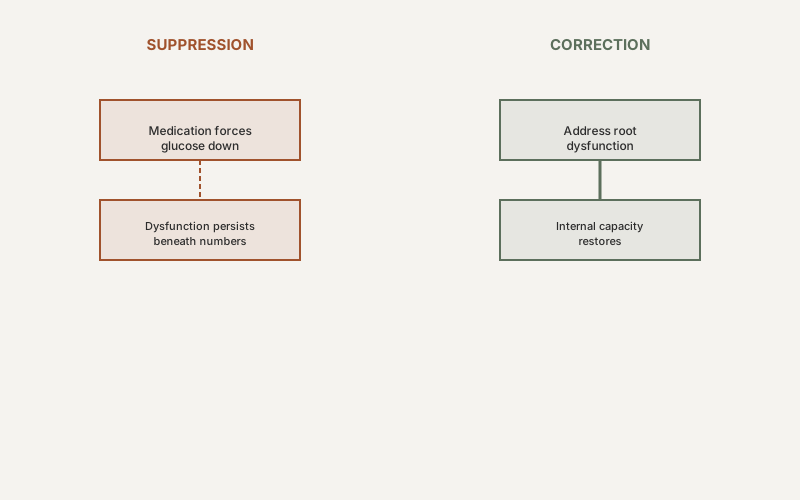
Achieving controlled HbA1c through medication escalation and strict glucose management involves fundamentally different biology than achieving it through internal metabolic restoration. Medication can force glucose into cells or block glucose production even when cellular machinery remains damaged. Insulin injections override insulin resistance through sheer pharmaceutical force. Metformin suppresses hepatic glucose output regardless of underlying liver dysfunction.
These interventions succeed at lowering blood glucose—the visible metric—while leaving cellular dysfunction entirely unaddressed. Insulin receptors remain degraded. Mitochondrial damage persists. Inflammatory pathways stay activated. Epigenetic modifications continue driving dysfunctional gene expression. The cell is forced to process glucose it cannot properly metabolize, creating additional oxidative stress and further cellular damage.
A patient on intensive insulin therapy may show HbA1c of 6.5% while their cells experience ongoing metabolic chaos. Glucose enters under pharmaceutical compulsion, but the cellular machinery to properly utilize that glucose remains impaired. Energy production stays inefficient. Byproducts of incomplete metabolism accumulate. The surface metric improves while internal pathology deepens.
Glucose Variability Hidden Within Average Readings
HbA1c represents an average, and averages conceal patterns. A patient with stable glucose around 140 mg/dL and a patient with wild swings between 80 and 250 mg/dL may show identical HbA1c values. The metric cannot distinguish between consistent moderate elevation and dangerous oscillation.
Glucose variability—the magnitude of swings from low to high—drives complications independently of average levels. Large fluctuations trigger oxidative stress bursts that damage cells more severely than stable elevation. They activate inflammatory pathways repeatedly. They stress cellular adaptation systems beyond capacity. Continuous glucose monitoring reveals this variability in many patients whose HbA1c appears well-controlled.
A patient maintaining HbA1c below 7% through aggressive medication may experience multiple episodes daily of rapid glucose change—meals spiking levels high, medication driving them low, correction bringing them back up. Each cycle generates oxidative stress. Each swing challenges cellular homeostasis. The average hides chaos. The HbA1c shows control while internal metabolic stress continues unabated.
Progressive Organ Damage Despite Glycemic Control
Clinical research reveals that normalized HbA1c does not prevent complications in patients with long diabetes duration. Studies show continued progression of retinopathy, nephropathy, and neuropathy in patients maintaining target glucose levels for years. The phenomenon appears paradoxical until one understands that glucose readings measure only one aspect of a multi-system metabolic disorder.
Microvascular damage in kidneys, retinas, and nerves continues when driven by factors beyond simple glucose concentration: chronic inflammation, oxidative stress, advanced glycation products, and cellular dysfunction. These processes operate partly independently of current glucose levels. They reflect years of accumulated damage that persists even after glycemic improvement.
The pancreas may continue losing beta-cell function despite controlled glucose. The liver may develop progressive fat accumulation and fibrosis. Cardiovascular disease risk remains elevated. Cognitive decline associated with diabetes advances. None of these complications respect the HbA1c threshold. They respond to deeper metabolic dysfunction that HbA1c cannot measure.
What HbA1c Cannot Detect
HbA1c measurement provides no information about insulin resistance severity, pancreatic reserve capacity, hepatic function, muscle glucose disposal ability, inflammatory burden, oxidative stress levels, mitochondrial health, or any of the dozens of metabolic parameters that determine actual disease state. A patient could show perfect HbA1c while experiencing severe insulin resistance requiring massive medication doses, profound pancreatic exhaustion, dangerous hepatic dysfunction, and systemic inflammation.
The metric also reveals nothing about metabolic stability—the body's ability to maintain glucose regulation under varying conditions. A patient whose controlled HbA1c depends on rigid dietary restriction, precise medication timing, and minimal stress cannot handle normal life variability. Their apparent control is fragile, maintained through external force rather than internal resilience. Deviation from strict routine produces immediate destabilization.
True metabolic health involves flexibility—the capacity to maintain reasonable glucose levels across diverse conditions without pharmaceutical micromanagement. Metabolic stability, not just average glucose, determines long-term outcomes and quality of life. HbA1c captures neither stability nor resilience.
The False Confidence Problem
Perhaps the most dangerous consequence of HbA1c-focused management is the false confidence it creates. Patients achieving target numbers believe their diabetes is under control. They may reduce vigilance around symptoms. They may delay seeking additional help because their labs look acceptable. They continue with approaches that suppress glucose without addressing dysfunction, assuming that controlled numbers equal arrested disease.
Meanwhile, silent progression continues. Complications develop. Medication requirements increase despite maintained HbA1c. The patient feels they are doing everything right—following medical advice, achieving target numbers—yet the disease advances. When complications finally become apparent, years of opportunity for deeper intervention have passed.
This disconnect between metrics and reality explains why many long-term diabetics express frustration with standard management. They achieve the numbers their physicians want. They maintain HbA1c below 7%. Yet they feel progressively worse. Their energy declines. Their medication needs increase. New symptoms emerge. The controlled HbA1c provides neither protection nor genuine improvement in their lived metabolic reality.
Beyond Glucose: Measuring What Matters
Recognition that HbA1c inadequately captures metabolic health demands broader assessment. Insulin levels and insulin resistance indices reveal how hard the body works to achieve glucose numbers. C-peptide measurements indicate remaining pancreatic function. Inflammatory markers like high-sensitivity C-reactive protein show systemic inflammatory burden. Advanced lipid panels detect metabolic dysregulation beyond basic cholesterol.
More sophisticated monitoring includes continuous glucose monitoring to assess variability, not just averages. Assessment of medication burden—how many drugs at what doses are required to maintain control. Evaluation of metabolic flexibility through standardized challenge tests. These measures provide insight into actual metabolic state rather than just glucose suppression level.
The goal shifts from achieving a specific HbA1c number to achieving genuine metabolic restoration—reduced insulin resistance, improved pancreatic function, decreased inflammatory burden, enhanced cellular glucose metabolism. In this framework, HbA1c becomes one data point among many, useful but insufficient for determining treatment success or disease state. Ayurvedic perspective: From an Ayurvedic diagnostic standpoint, the real question is never 'what is the HbA1c?' but 'what is the state of the internal metabolic coordination producing it?' — a distinction that changes both the assessment and the intervention entirely.