
Beyond Isolated Organ Dysfunction
Conventional diabetes understanding focuses on specific organ deficits: the pancreas produces insufficient insulin, the liver releases excessive glucose, muscle tissue resists insulin signaling, adipose tissue becomes inflamed. These observations are accurate but incomplete. They describe individual components failing without explaining why those components lose their ability to work together as an integrated system.
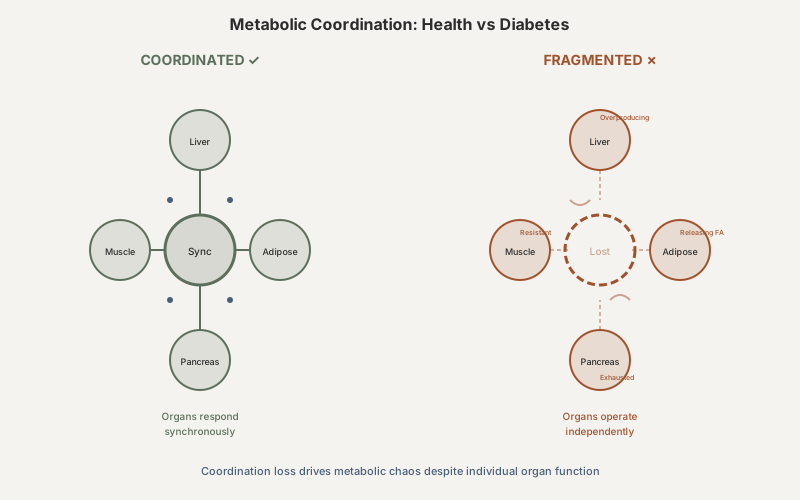
Healthy metabolism depends on precise coordination between organs. After a meal, the pancreas must increase insulin secretion in proportion to nutrient load. The liver must suppress glucose production while taking up glucose for storage. Muscle and adipose tissue must enhance glucose uptake. Fat tissue must suppress lipolysis to prevent fatty acid release. These responses must occur simultaneously, in correct magnitude, and with proper timing.
This coordination requires continuous communication between organs through hormones, metabolites, and neural signals. Insulin itself is a coordinating signal, but dozens of other molecules participate: incretin hormones from intestine, leptin and adiponectin from fat tissue, hepatokines from liver, myokines from muscle. These signals create a metabolic conversation where each organ responds to others' states and adjusts its own function accordingly.
In diabetes, this conversation deteriorates into noise. Signals become distorted. Responses lose synchronization. The pancreas secretes insulin, but peripheral tissues ignore the signal. The liver overproduces glucose while muscle simultaneously resists glucose uptake. Fat tissue releases fatty acids at inappropriate times. Individual organs may retain some function, but they operate discordantly, creating metabolic chaos despite each component attempting to do its job.
"Ayurveda frames this as a disorder of Tridosha coordination — the three governing principles of metabolic activity losing their balanced interplay. When Vata, Pitta, and Kapha operate out of synchrony, the body's capacity for coordinated metabolic response degrades."
Ayurvedic Clinical Lens · Diabetes Reversal Clinic
The Communication Network and Its Breakdown
Metabolic coordination operates through three primary communication channels: endocrine signaling through hormones, paracrine signaling through locally released molecules, and neural signaling through autonomic nervous system pathways. In health, these channels function reliably. Hormone receptors respond appropriately to their ligands. Signal transduction pathways transmit messages accurately. Neural inputs modulate metabolic responses in real-time.
Chronic metabolic stress degrades all three channels. Hormone receptors downregulate or become insensitive—not just insulin receptors but receptors for leptin, adiponectin, incretin hormones, and other coordinating signals. Tissues become simultaneously resistant to multiple regulatory hormones, losing ability to respond to coordination signals even when those signals are present at normal or elevated levels.
Signal transduction pathways that should propagate coordinating messages into cellular responses develop defects. Proteins that normally transmit signals get modified by inflammatory kinases, blocking signal transmission. Second messenger systems become dysregulated. Gene transcription factors that should respond to coordination signals remain inactive or activate inappropriately. The cellular machinery translating coordination signals into coordinated responses fails at multiple points.
Autonomic nervous system function deteriorates, particularly parasympathetic pathways that normally coordinate fed-state metabolism. Vagal tone decreases, reducing pancreatic insulin secretion in response to meals. Sympathetic activity becomes excessive, promoting hepatic glucose production and lipolysis at inappropriate times. Neural coordination of metabolism—immediate and precise in health—becomes slow, blunted, and dysregulated in diabetes.
Temporal Dysynchronization
Metabolic coordination requires not just appropriate responses but appropriately timed responses. After eating, the sequence matters: incretin hormones should rise first, stimulating insulin secretion before glucose peaks. Insulin should rise as glucose rises, not lagging behind. Hepatic glucose suppression should occur within minutes. Muscle glucose uptake should peak within an hour. Fat tissue should suppress lipolysis immediately and maintain suppression for hours.
In diabetes, these temporal relationships fragment. Insulin secretion lags glucose elevation—the pancreas responds slowly to meals, allowing glucose to spike before insulin arrives to facilitate disposal. When insulin finally increases, it remains elevated too long, persisting after glucose has normalized and potentially causing late hypoglycemia. The temporal mismatch creates both hyperglycemia during early post-meal period and hypoglycemia later.
Hepatic glucose suppression occurs too slowly or incompletely. The liver continues pouring glucose into circulation even as dietary glucose is being absorbed, creating excessive total glucose load. Hours later, when hepatic suppression should release to prevent hypoglycemia, the liver may remain overly suppressed or swing to excessive production. The temporal dysregulation creates glucose variability and instability.
Fat tissue lipolysis—the release of fatty acids from stored triglycerides—loses its normal temporal pattern. It should suppress completely after meals and activate during fasting. In diabetes, basal lipolysis remains elevated continuously. Meals fail to suppress fatty acid release adequately. The constant fatty acid flux interferes with muscle glucose uptake and worsens hepatic insulin resistance through lipotoxic mechanisms. The temporal coordination of fat metabolism with carbohydrate metabolism collapses.
Loss of Metabolic Flexibility
Healthy metabolism demonstrates flexibility—the ability to switch between fuel sources based on availability and need. After meals, cells preferentially oxidize glucose and store fat. During fasting, they switch to fatty acid oxidation and spare glucose for brain. Exercise triggers another metabolic state favoring fat oxidation in muscle. This metabolic flexibility requires coordination: all relevant organs must shift fuel preference simultaneously.
Diabetes creates metabolic inflexibility. Cells lose ability to appropriately switch between fuels. Muscle continues attempting to oxidize fatty acids even when glucose is abundant, reducing glucose uptake. During fasting, cells fail to efficiently mobilize and oxidize fat stores, maintaining dependence on glucose even when it's scarce. The inability to match fuel oxidation to fuel availability creates constant metabolic stress.
This inflexibility reflects coordination failure at the cellular level. Mitochondria cannot rapidly shift between glucose and fatty acid oxidation because the enzymatic machinery for fuel switching is dysregulated. Transcription factors that should coordinate metabolic gene expression respond sluggishly or inappropriately. Cells become locked into disordered metabolic states that don't match their environmental conditions.
Ayurvedic Recognition of Coordination Failure
Ayurvedic medicine has described diabetes as a coordination disorder for millennia, though obviously using different terminology than modern biochemistry. The framework recognizes that individual organs may retain functional capacity yet lose ability to work in concert. The liver may function adequately in isolation, the pancreas may produce sufficient insulin, muscle may have adequate metabolic machinery—yet these organs fail to coordinate appropriately.
This Ayurvedic insight explains why interventions targeting individual organs often disappoint. Improving pancreatic function while liver and muscle remain uncoordinated provides minimal benefit—the pancreas produces more insulin but peripheral tissues still fail to respond synchronously. Enhancing muscle glucose uptake while hepatic glucose production remains dysregulated merely shifts where the coordination failure manifests.
Ayurvedic intervention therefore targets restoration of coordination itself, not just individual component function. This requires identifying what disrupts coordination—inflammatory mediators interfering with signaling, autonomic imbalance preventing neural coordination, circadian disruption fragmenting temporal patterns, nutrient imbalances affecting metabolic synchronization—and addressing those root causes.
The goal becomes reestablishing metabolic conversation between organs. When liver, muscle, pancreas, and adipose tissue resume communicating effectively through restored hormonal sensitivity, neural function, and appropriate metabolic signaling, coordinated function returns. Glucose regulation improves not because individual organs function better in isolation but because they synchronize their activities appropriately.
Circadian Disruption and Lost Daily Coordination
Metabolic coordination operates on daily cycles governed by circadian rhythms. Insulin sensitivity peaks in morning and declines through day. Hepatic glucose production follows daily patterns. Fat tissue lipolysis varies with circadian phase. These rhythms coordinate metabolic responses to anticipated needs—high morning insulin sensitivity prepares for daytime eating, evening insulin resistance prepares for overnight fasting.
Diabetes disrupts circadian metabolic coordination. Insulin sensitivity rhythms flatten or reverse. Hepatic glucose production loses its daily pattern. Fat tissue metabolism becomes arrhythmic. The loss of temporal organization means organs operate on uncoordinated schedules—the liver producing glucose maximally when peripheral tissues are most insulin-sensitive, fat releasing fatty acids when they should be stored.
Restoring circadian coordination requires more than glucose management. It demands reestablishing daily rhythms through consistent meal timing, light exposure patterns, sleep-wake cycles, and activity schedules. These behavioral patterns entrain peripheral clocks in metabolic tissues, gradually restoring temporal organization of metabolic responses.
Why Standard Treatment Inadequately Addresses Coordination
Conventional diabetes treatment targets individual components—medications for glucose, separate drugs for lipids, additional agents for blood pressure. Each medication improves its specific parameter but does nothing to restore coordination between systems. A patient may achieve target glucose, lipids, and blood pressure through separate pharmaceutical interventions while underlying coordination failure persists.
This fragmented approach sometimes worsens coordination problems. High-dose insulin therapy may improve glucose control but creates persistent hyperinsulinemia that disrupts normal insulin signaling rhythms. Aggressive glucose lowering may trigger counterregulatory hormone release that worsens metabolic stability. Medications affecting one organ may create unintended effects on others, further fragmenting coordination.
Protocols applying identical treatment to all patients ignore individual coordination patterns. Two patients with the same glucose readings may have entirely different coordination failures—one with primary hepatic dysregulation, another with adipose-muscle communication breakdown. Identical treatment cannot address different coordination pathologies effectively.
Restoring Coordinated Function
Coordination restoration requires simultaneous work across multiple domains. Hormonal signaling must be repaired through reducing hormone resistance, restoring receptor sensitivity, and normalizing hormone rhythms. Neural coordination needs autonomic rebalancing, often through stress reduction, improved sleep, and restoration of parasympathetic tone. Inflammatory mediators disrupting signaling must be reduced systemically.
Temporal coordination demands consistent behavioral rhythms—regular meal timing, stable sleep-wake cycles, predictable activity patterns. These externally imposed rhythms provide scaffolding for internal circadian systems to reorganize. Over months, peripheral clocks in metabolic tissues entrain to behavioral patterns, gradually restoring temporal metabolic coordination.
The timeline for coordination restoration extends longer than for improving individual organ parameters. Glucose can be suppressed within days through medication. But restoring synchronized function across liver, muscle, pancreas, and adipose tissue requires those organs to rebuild communication systems—receptor regeneration, signal transduction pathway repair, autonomic reinnervation, circadian rhythm reestablishment. These processes operate on timelines of months to years.
Progress manifests not just as better numbers but as improved metabolic stability. Glucose becomes more stable with less variability. Responses to meals become more predictable. Energy levels stabilize through the day. These signs indicate that organs are beginning to coordinate appropriately rather than operating in metabolic chaos. The reemergence of coordination—not just the suppression of glucose—represents genuine metabolic restoration. Ayurvedic perspective: Restoring internal coordination — rather than suppressing individual parameters — is the central therapeutic objective of Ayurvedic metabolic correction, which is why it works at the level of constitutional assessment rather than isolated biomarkers.