
The Reality of Variable Response Capacity
Deep metabolic correction does not work equally for all diabetics. This is not failure of approach but biological reality. Some patients possess the remaining organ capacity, cellular repair potential, and metabolic resilience needed for meaningful reversal. Others have progressed beyond the point where current intervention can restore sufficient function. Distinguishing between these groups prevents wasted effort and inappropriate expectations.
This distinction is uncomfortable for both patients and clinicians. It means acknowledging that not everyone can achieve the same outcomes despite equal effort. It requires honest assessment of biological constraints rather than motivational platitudes about trying harder. But denying variation in reversal potential serves no one—it creates false hope for some while potentially discouraging others who could benefit substantially.
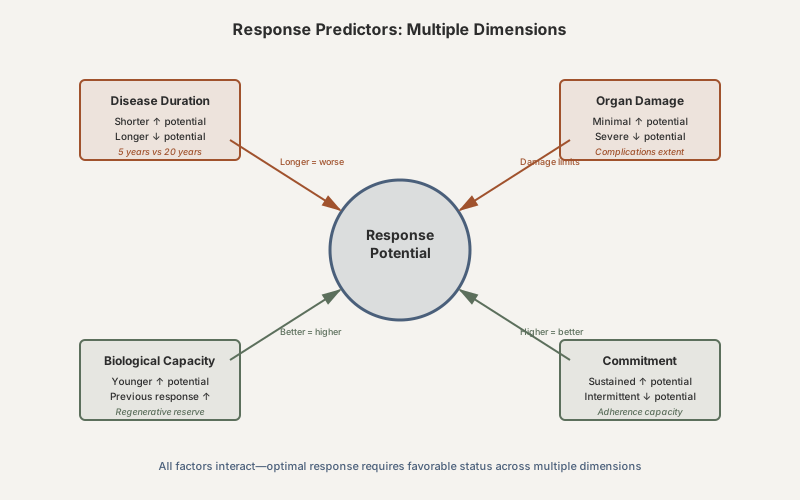
Assessment of reversal potential examines multiple dimensions: remaining organ functional capacity, extent of structural damage versus functional dysfunction, inflammatory burden and resolution capacity, genetic factors affecting cellular repair, and critically—patient capacity for sustained intensive intervention over extended timelines.
What follows describes general patterns indicating higher or lower reversal potential. These are tendencies, not absolutes. Individual variation means some patients with apparent poor prognosis indicators achieve substantial reversal while others with favorable indicators plateau disappointingly. But the patterns provide useful guidance for realistic expectation-setting and appropriate candidate selection.
"In Ayurvedic assessment, response capacity is evaluated through Bala — the body's vital strength and biological resilience. Constitutional strength, depth of Dhatu involvement, and remaining Ojas reserve all determine whether correction is possible and at what pace it can proceed."
Ayurvedic Clinical Lens · Diabetes Reversal Clinic
Disease Duration and Accumulated Damage
Disease duration correlates inversely with reversal potential, though the relationship is not linear. Early diabetes—under five years duration—generally shows high reversal capacity because structural damage remains minimal. Functional abnormalities predominate over structural pathology. Intervention at this stage can prevent most progression and restore near-normal function.
Intermediate duration—five to fifteen years—presents variable reversal potential depending heavily on control quality during that period. Patients maintaining reasonable HbA1c below 8% throughout may have minimal structural damage despite substantial duration. Those with years of poor control have accumulated damage limiting reversal despite not being at maximum disease duration.
Long duration—beyond fifteen to twenty years—creates substantial challenges regardless of control quality. Years of metabolic stress accumulate effects even under good management. Structural changes become extensive. Reversibility potential decreases significantly, though meaningful stabilization and slowing of progression remains achievable. Expectations must adjust to biological reality of long-term damage.
However, duration alone provides insufficient assessment. A patient with eight years of severely uncontrolled diabetes may have worse structural damage than someone with fifteen years of reasonable control. Glycemic history quality matters more than duration number. Assessing accumulated damage requires examining complication status, organ function markers, and clinical evidence of structural versus functional pathology.
Complication Status and Reversibility Limits
Absence of significant complications indicates preserved organ integrity and higher reversal potential. Patients with no retinopathy, no proteinuria, intact sensation, normal kidney function despite years of diabetes demonstrate remarkable organ resilience. This resilience suggests capacity to respond well to corrective intervention because damage has been limited despite disease presence.
Early complications—mild non-proliferative retinopathy, microalbuminuria, minimal neuropathy—indicate emerging but not yet advanced damage. These changes may partially reverse or at minimum stabilize with appropriate intervention. The window for preventing progression to irreversible stages remains open. Aggressive correction at this point prevents advancement to stages where reversal becomes impossible.
Advanced complications—proliferative retinopathy, overt proteinuria with declining kidney function, established severe neuropathy—demonstrate extensive structural damage with minimal reversibility. While progression can slow and function may stabilize, restoration of lost vision, kidney capacity, or nerve function essentially never occurs. Expectations must center on preventing further deterioration rather than reversing established damage.
Multiple advanced complications simultaneously indicate systemic structural pathology throughout microvascular and macrovascular systems. Reversal potential in such cases is severely limited. Metabolic optimization may slow progression and improve quality of life, but dramatic functional restoration becomes biologically implausible given extensive multi-system structural damage.
Medication Requirements as Capacity Indicator
Patients controlled on single oral medication demonstrate relatively preserved metabolic capacity. Their dysfunction has not progressed to require aggressive multi-drug regimens. This pharmaceutical modesty suggests remaining organ function can maintain adequate regulation with modest support—favorable for reversal potential.
Multiple oral medications indicate more advanced dysfunction but not necessarily irreversible pathology. The specific medication combination reveals failure patterns: metformin plus SGLT2 inhibitor suggests hepatic and renal involvement; metformin plus sulfonylurea indicates pancreatic stress; multiple classes suggest multi-organ dysfunction. Understanding the pattern guides correction approach and predicts response potential.
Insulin requirement traditionally signals advanced disease, though Type 2 diabetics on insulin show variable reversal potential. Those recently started on modest insulin doses due to stress or illness may retain substantial pancreatic reserve. Those on high-dose insulin for years likely have minimal remaining beta-cell function. C-peptide measurement distinguishes these scenarios—detectable C-peptide indicates recovery potential; absent C-peptide suggests permanent insulin dependency.
Maximum medication with poor control represents the most challenging scenario. Patients on multiple agents including high-dose insulin yet maintaining HbA1c above 8-9% demonstrate severe treatment-resistant dysfunction. Reversal potential exists but requires the most intensive intervention and realistic expectations center on achieving stability and slowing decline rather than dramatic improvement.
Response to Previous Interventions
Patients who responded well to previous lifestyle interventions or medication adjustments demonstrate metabolic responsiveness indicating good reversal potential. If dietary changes produced meaningful improvement, if exercise significantly reduced glucose, if modest medication adjustments created disproportionate benefit—these patterns suggest remaining metabolic flexibility and adaptive capacity.
Conversely, patients showing minimal response to multiple aggressive interventions may have limited reversal capacity. If intensive lifestyle modification produced trivial improvement, if medication escalation barely maintained control, if every intervention yields disappointing results—this resistance pattern suggests advanced dysfunction with limited remaining adaptive capacity.
However, resistance to standard interventions does not necessarily predict resistance to deep metabolic correction. Standard approaches target symptoms; deep correction addresses root causes. Some patients who plateau under conventional treatment respond dramatically when intervention sophistication matches their pathology complexity. But the pattern of poor standard response does warrant tempered expectations pending evidence of deep correction response.
Age and Regenerative Capacity
Younger patients generally show superior reversal potential through multiple mechanisms: better cellular repair capacity, more robust mitochondrial function, stronger immune system competence, greater adaptive reserve. A forty-year-old with ten years of diabetes has far better reversal prospects than a seventy-year-old with identical disease characteristics.
Age-related decline in regenerative capacity creates realistic constraints. Elderly patients may achieve meaningful stabilization and quality of life improvement but face biological limits on dramatic functional restoration. Accepting these age-related constraints prevents pursuit of unrealistic goals while still enabling worthwhile improvement within achievable parameters.
That said, chronological age does not perfectly predict biological age or reversal capacity. Some elderly patients demonstrate remarkable resilience and adaptation. Others show premature aging and minimal repair capacity. Biological assessment of actual functional status and regenerative markers provides better prediction than chronological age alone.
Capacity for Sustained Intensive Engagement
Perhaps the most critical predictor of reversal success is patient capacity for sustained intensive intervention over extended timelines. Deep metabolic correction requires consistent effort for months to years. It demands dietary discipline, regular activity, medication adherence, frequent monitoring, tolerance for gradual progress, and persistence through plateaus.
Patients with stable life circumstances, strong support systems, adequate resources, psychological resilience, and genuine commitment to long-term health show higher success rates regardless of disease severity. Those facing major life stressors, lacking support, experiencing financial constraints, or approaching intervention as short-term fix show poor outcomes even with favorable biological indicators.
This behavioral and psychological dimension often determines outcomes more than biological factors. A patient with advanced disease but exceptional commitment may achieve more than one with early disease but minimal engagement. Assessing intervention capacity proves as important as assessing biological capacity for realistic outcome prediction.
Favorable Indicator Patterns
The most favorable reversal candidates combine multiple positive indicators: diabetes duration under ten years with reasonable historical control, absence of advanced complications, modest medication requirements with good response history, younger age with good overall health, strong capacity for sustained lifestyle modification, and realistic expectations aligned with achievable outcomes.
These patients typically achieve substantial medication reduction, meaningful HbA1c improvement, enhanced metabolic stability, and prevention of complication progression. Many reach states requiring minimal pharmaceutical support while maintaining good metabolic function. The work is still intensive and prolonged, but outcomes justify the investment.
Even patients lacking all favorable indicators may achieve meaningful improvement if they possess exceptional commitment and access to sophisticated intervention. The work becomes more difficult, timelines extend longer, and expectations must moderate—but improvement remains possible. The question becomes whether the required effort and realistic outcomes align with patient goals and capacity. Ayurvedic perspective: Prakriti and Bala assessment at the start of treatment is not a formality in Ayurvedic practice — it is the foundational diagnostic step that determines whether aggressive correction, gentle restoration, or realistic stabilisation is the appropriate clinical objective.