The Necessity of Acknowledging Limits
Ayurvedic metabolic correction, despite its sophistication in addressing complex systemic dysfunction, is not universally effective. Some patients will not respond meaningfully regardless of intervention intensity or practitioner skill. This is not treatment failure but biological reality. Certain pathological states have progressed beyond the point where current intervention—of any type—can restore sufficient function for meaningful reversal.
Acknowledging these limits serves multiple purposes. It prevents patients from pursuing futile intervention at substantial cost in time, money, and hope. It allows realistic goal-setting for those at biological boundaries—focusing on stabilization and quality of life rather than impossible restoration. It maintains clinical honesty essential for trust and appropriate decision-making.
This acknowledgment also protects the integrity of reversal approaches by not claiming universal effectiveness. When every patient is promised success, inevitable failures discredit legitimate methods. Honest recognition that some patients lie beyond current intervention capacity actually strengthens credibility for work with appropriate candidates.
What follows describes situations where deep metabolic correction shows minimal effectiveness. These are not soft contraindications where caution is warranted but hard biological limits where intervention cannot overcome accumulated structural damage. Understanding these boundaries prevents inappropriate treatment attempts while guiding patients toward realistic alternatives.
"Ayurveda has always acknowledged Asadhya Vyadhi — diseases that have passed beyond the point of correction. Clinical honesty about these limits is not a failure of the system; it is an expression of its integrity. Knowing what cannot be corrected is as important as knowing what can."
Ayurvedic Clinical Lens · Diabetes Reversal Clinic
Complete Pancreatic Failure
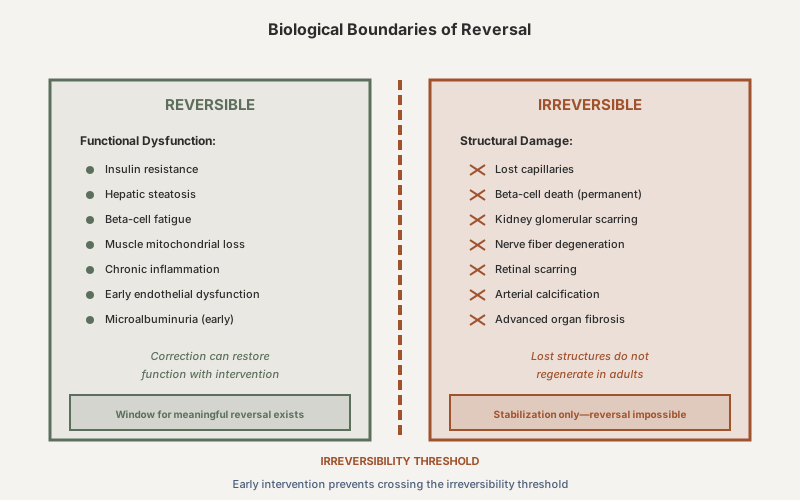
Patients who have lost essentially all pancreatic beta-cell function cannot reverse to medication independence regardless of intervention. When C-peptide is undetectable even with stimulation, no living beta cells remain to recover. The pancreas has crossed from fatigue into failure. No amount of metabolic optimization can restore insulin production capacity that depends on cells that no longer exist.
This irreversible loss typically occurs after decades of progressive diabetes or in cases of particularly aggressive beta-cell destruction. Such patients will require insulin permanently. Metabolic correction may reduce insulin requirements through improving peripheral insulin sensitivity, but complete insulin independence is biologically impossible when endogenous production capacity is absent.
For these patients, appropriate goals involve optimizing insulin regimens, preventing further complications, and maintaining quality of life. Deep metabolic work may still provide value through reducing inflammation, improving insulin sensitivity, and slowing progression. But expectations must align with reality: insulin will always be necessary when the organ producing it no longer functions.
Advanced Kidney Disease
Diabetics with severely reduced kidney function—eGFR below 30, advanced proteinuria, structural kidney damage on imaging—have crossed into irreversible nephropathy. Lost nephrons do not regenerate. Scarred glomeruli do not heal. While progression can sometimes slow, restoration of lost kidney function essentially never occurs regardless of metabolic intervention.
Advanced kidney disease also complicates intervention. Many metabolic correction approaches require adequate renal function for safety. Medication clearance becomes unpredictable. Certain supplements and interventions become contraindicated. The kidney dysfunction itself creates metabolic derangements—anemia, mineral imbalances, toxin accumulation—that interfere with correction attempts.
For such patients, appropriate focus is slowing progression to dialysis and managing complications. Metabolic optimization may provide some benefit, but dramatic reversal is impossible when a critical organ has failed irreversibly. Realistic planning for renal replacement therapy becomes more appropriate than pursuing metabolic reversal that cannot overcome established structural kidney damage.
Severe Established Cardiovascular Disease
Diabetics with advanced cardiovascular disease—history of multiple myocardial infarctions, severe coronary artery disease, significant heart failure, previous strokes—face cardiac limitations on intensive metabolic intervention. Exercise capacity is constrained. Dietary changes must accommodate cardiac restrictions. Medication adjustments risk cardiovascular destabilization.
More fundamentally, established atherosclerotic disease does not reverse through metabolic correction. Calcified arterial plaques persist. Scarred myocardium remains non-functional. Damaged heart valves do not heal. While preventing further cardiovascular events is worthwhile, restoration of normal cardiovascular function becomes impossible once structural heart and vascular damage is extensive.
Such patients require cardiovascular management as primary focus. Metabolic optimization becomes secondary concern serving cardiovascular protection rather than diabetes reversal per se. The severe cardiovascular disease both limits intervention options and reduces reversal potential even when intervention is possible.
Advanced Age With Multiple Comorbidities
Elderly patients with diabetes plus multiple other serious health conditions face compounded limitations. Limited life expectancy raises questions about aggressive long-term intervention value. Multiple medications for various conditions create interaction complexity. Reduced physiological reserve limits intervention tolerance. Cognitive decline may impair adherence capacity.
For an 80-year-old with diabetes, heart failure, kidney disease, and dementia, pursuing aggressive diabetes reversal makes little sense. The multi-year intensive intervention required cannot occur given limited remaining lifespan and competing health priorities. Modest symptom management and quality of life focus proves more appropriate than reversal attempts that impose burden without realistic benefit potential.
This is not ageism but clinical realism. Intervention intensity should match life stage and overall health context. Aggressive reversal pursuit appropriate for a 45-year-old with decades of life ahead becomes inappropriate burden for elderly patients with limited survival and multiple competing terminal conditions. Goals must align with actual life context.
Lack of Intervention Capacity
Even when biological reversal potential exists, some patients lack the life circumstances enabling intensive sustained intervention. Deep metabolic correction demands stable living situation, adequate resources, reliable social support, freedom from overwhelming life stressors, and capacity for consistent long-term behavioral modification.
Patients experiencing homelessness, severe poverty, active addiction, untreated severe mental illness, abusive relationships, or overwhelming caregiving burdens cannot engage intensive metabolic correction regardless of their biological potential. The intervention requirements exceed what their life circumstances permit. Attempting complex correction in these contexts sets up guaranteed failure.
For such patients, focus should be on addressing basic needs and managing acute crises rather than pursuing reversal. Once life stabilizes and intervention capacity exists, reversal work becomes appropriate. But attempting it prematurely wastes resources and creates additional failure experiences that damage motivation and self-efficacy.
Unrealistic Expectations and Misaligned Goals
Patients seeking rapid dramatic transformation rather than gradual progressive improvement will not succeed with deep metabolic correction regardless of biological capacity. The approach requires patience for extended timelines, tolerance for incremental progress, and acceptance of biological constraints on achievable outcomes.
Those demanding guaranteed specific outcomes, refusing to accept individual variation in results, or expecting complete restoration to pre-diabetic state after years of disease will inevitably be disappointed. Their expectations mismatch what biology permits. When expectations cannot adjust to realistic parameters, pursuing intervention creates frustration rather than satisfaction even when meaningful improvement occurs.
Similarly, patients seeking another quick fix after multiple failed short-term attempts often lack the mindset for sustained long-term work. They want transformation without extended effort. When intervention demands exceed willingness to provide sustained engagement, failure is predetermined regardless of biological potential.
When Standard Care Proves More Appropriate
For patients in above categories, standard diabetes management focused on symptom control, complication prevention, and quality of life maintenance proves more appropriate than reversal pursuit. There is no shame in acknowledging that aggressive correction is neither possible nor sensible given individual circumstances. Standard care, when accepted and followed consistently, provides meaningful benefit.
The key is matching intervention to individual reality—biological capacity, life circumstances, goals, and resources. For some, that means intensive reversal pursuit. For others, it means excellent standard care. For still others, it means palliative approach focused entirely on comfort and quality of remaining life. All are legitimate medical approaches when appropriately matched to patient situations.
Clinical honesty about who will not benefit from reversal attempts protects everyone involved. It prevents patients from investing in futile intervention. It allows practitioners to focus resources on those who can benefit. It maintains integrity by not promising universal effectiveness. Most importantly, it enables appropriate alternative care pathways for those whom reversal cannot serve. Ayurvedic perspective: Ayurvedic assessment identifies these boundaries through constitutional evaluation and organ capacity testing — and where correction is not possible, the goal shifts to Palliative Shamana: reducing burden, maintaining function, and preserving quality of life.